Flag of Libya
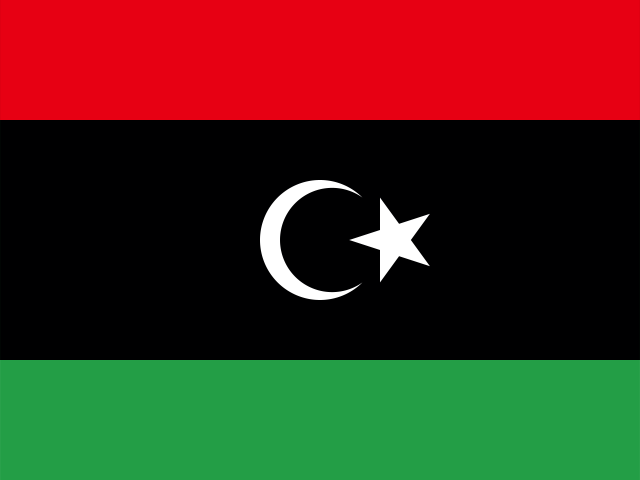
countryThe flag of Libya was adopted on August 3, 2011. Horizontal triband with a crescent and star. It uses 4 colours: red, black, green and white. The official proportions are 1:2.
Basic Flag Information
| Flag Name | Flag of Libya |
|---|---|
| Country | Libya |
| Official Country Name | State of Libya |
| Capital | Tripoli |
| Continent | Africa |
| Region | Northern Africa |
| ISO Country Code | LY / LBY |
| Internet Domain | .ly |
| Calling Code | +218 |
| Currency | Libyan dinar (LYD) |
| National Language(s) | Arabic |
| Demonym | Libyan |
| Area | 1,759,540 km² |
| Population | 7.4 million (2025 est.) |
Flag Specifications
| Official Flag Name | Flag of Libya |
|---|---|
| Adopted On | August 3, 2011 |
| First Used | 1951 |
| Current Version Adopted | August 3, 2011 |
| Flag Proportion | 1:2 |
| Flag Shape | Rectangle |
| Number of Colors | 4 |
| Main Colors | Red, Black, Green, White |
| Design Type | Horizontal triband with a crescent and star |
| Official Status | Official National Flag |
| Government Authority | Government of Libya |
Flag Color Information
| Color | Appearance | HEX Code | RGB | CMYK |
|---|---|---|---|---|
| Red | #E70013 | 231, 0, 19 | 0, 100, 92, 9 | |
| Black | #000000 | 0, 0, 0 | 0, 0, 0, 100 | |
| Green | #239E46 | 35, 158, 70 | 78, 0, 56, 38 | |
| White | #FFFFFF | 255, 255, 255 | 0, 0, 0, 0 |
Flag Design and Symbols
| Red colour | Represents the blood shed for freedom |
|---|---|
| Black colour | Represents the dark years under Italian occupation |
| Green colour | Represents the land and prosperity |
| White colour | Represents the crescent and star |
| Crescent and star | Islam — the flag of the Kingdom of Libya, restored in 2011 after four decades of the plain green flag |
Flag History
| Year / Period | Event |
|---|---|
| 1951 | The design was first used |
| 2011-08-03 | The current flag was officially adopted |
| Present | The flag remains in official use |
| Present | The flag remains in official use |
Flag Dimensions and Construction
| Official Ratio | 1:2 |
|---|---|
| Width | 1 units (hoist) |
| Length | 2 units (fly) |
Libya Flag Usage
| Government Buildings | Yes |
|---|---|
| Schools | Yes |
| Civil Use | Yes |
| Official Ceremonies | Yes |
| Sports Events | Yes |
| National Holidays | Yes |
| Military | Yes |
| Naval Use | Yes |
| Embassies | Yes |
| International Events | Yes |
Other Official Flags of Libya
| Flag Type | Use | Link |
|---|---|---|
| National Flag | National representation | View flag |
| Civil Flag | Used by civilians | View flag |
| State Flag | Used by government | View flag |
| War Flag | Used during military operations | View flag |
| Naval Ensign | Used by the navy | View flag |
| Air Force Flag | Used by the air force | View flag |
| Presidential Standard | Used by the head of state | View flag |
| Royal Standard | Used by the monarch | View flag |
| Historical Flag | Previous national flag | View flag |
Quick Facts About the Flag
| Flag Age | 15 years old as of 2026 |
|---|---|
| Adoption Date | August 3, 2011 |
| Oldest Version | 1951 |
| Most Common Color | Red |
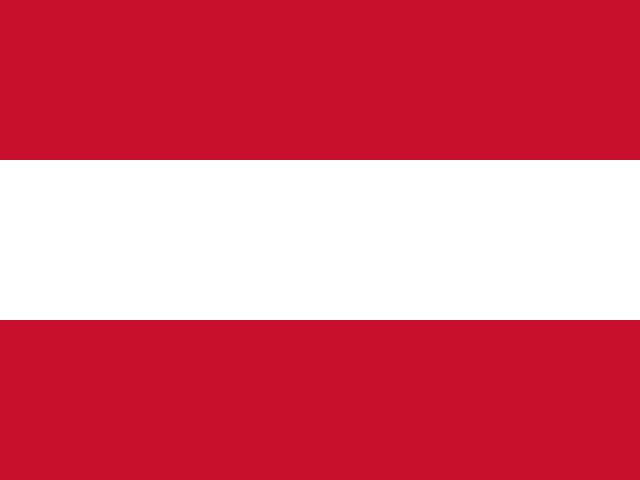
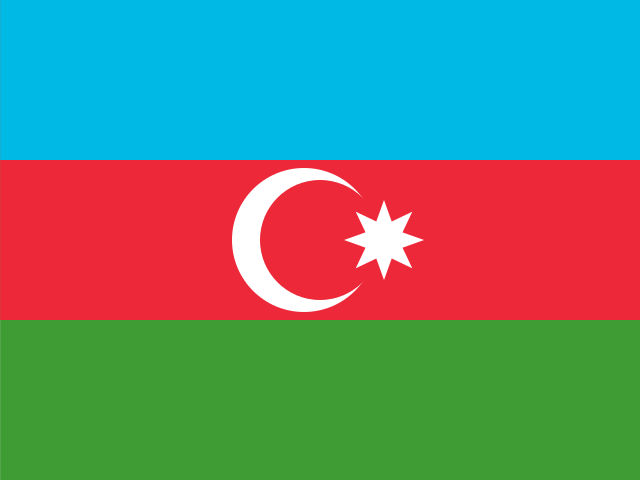
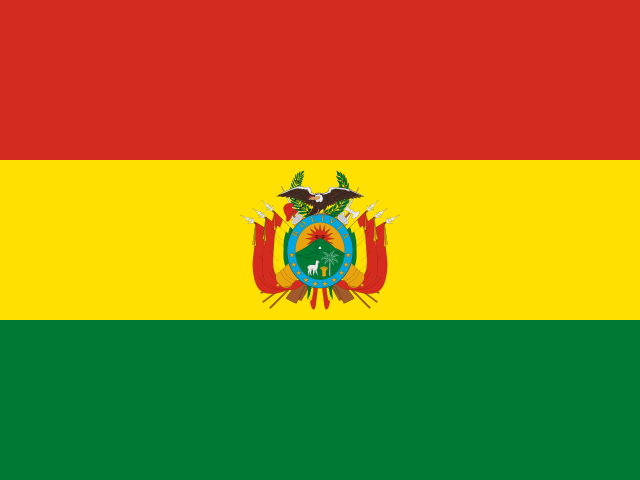
| Similar Flags | Austria, Azerbaijan, Bolivia |
| Unique Feature | Horizontal triband with a crescent and star |
Other horizontal tricolour flags
See all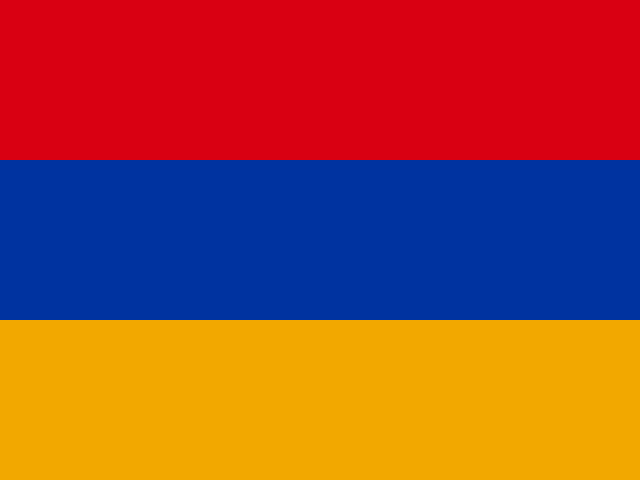
Facts about the Flag of Libya
- The 1951 flag of the Kingdom of Libya was restored in 2011, replacing the plain green field that had flown since 1977.
- That green flag was the only single-colour national flag in modern history, with no charge, stripe or emblem of any kind.
- The flag of Libya was officially adopted on August 3, 2011.
- The design is older than its adoption. It was already in use in 1951, 60 years before it was formally made the flag of Libya.
- The flag in its present form is 15 years old as of 2026.
- Design type: Horizontal triband with a crescent and star.
- The official proportions are 1:2. It shares that ratio with 54 national flags.
- The flag uses 4 colours: red, black, green and white.
- The red on the flag stands for the blood shed for freedom.
- The black on the flag stands for the dark years under Italian occupation.
- The green on the flag stands for the land and prosperity.
- Crescent and star: Islam — the flag of the Kingdom of Libya, restored in 2011 after four decades of the plain green flag.
- The design belongs to the "Horizontal tricolour" family, shared with 32 other flags in this reference.
- Flags most often confused with it: Austria, Azerbaijan and Bolivia.
- Libya became independent on 24 December 1951 from Italy, under United Nations administration.
- Football is the most popular sport.
- The national anthem is "Libya, Libya, Libya".
- The flag is flown everywhere on 24 December, Independence Day.
Frequently Asked Questions about the Flag of Libya
When was the flag of Libya adopted?
The flag of Libya was officially adopted on August 3, 2011, though the design had already been in use since 1951.
What do the colours of the flag of Libya mean?
Red for the blood shed for freedom, black for the dark years under Italian occupation, green for the land and prosperity and white for the crescent and star.
When did Libya gain independence?
Libya became independent on 24 December 1951 from Italy, under United Nations administration.
What is the national sport of Libya?
Football is the most popular sport.
What do the symbols on the flag of Libya represent?
Crescent and star — Islam — the flag of the Kingdom of Libya, restored in 2011 after four decades of the plain green flag.
What are the proportions of the flag of Libya?
The official ratio is 1:2, which makes the flag rectangular. It shares those proportions with 54 national flags.
What is the national anthem of Libya?
The national anthem is "Libya, Libya, Libya".
When is the national day of Libya?
It falls on 24 December, Independence Day, and the flag is flown across the country.
What is the capital of Libya?
The capital is Tripoli. The currency is the Libyan dinar (LYD) and the language spoken is Arabic.
Which flags look similar to the flag of Libya?
The closest matches are Austria, Azerbaijan and Bolivia, which share both the construction and most of the colours.