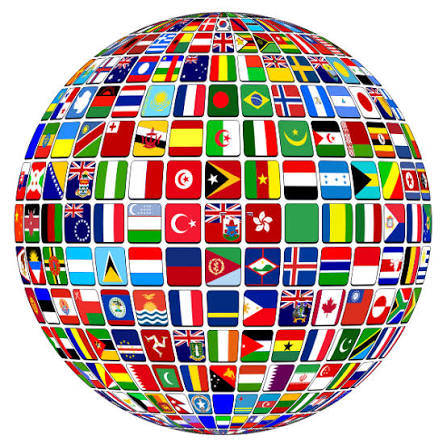
Flags are among the most recognisable symbols created by human societies. A few colours, shapes or symbols can represent an entire country, region, city, political movement, organisation or historical event.
Some flags have survived for centuries. Others disappeared within a few years. Some were created after independence, revolutions or political change, while others emerged from public competitions, constitutional decisions or national referendums.
This collection brings together 500 facts about flags from around the world. It explores flag history, colours, shapes, symbols, national and regional designs, unusual features, records, traditions and the study of flags itself.
The Oldest and Most Historic Flags
Denmark’s Dannebrog is widely recognised as the world’s oldest continuously used national flag
Denmark’s Dannebrog is generally recognised as the oldest national flag still in continuous use. Historical evidence places the familiar design in use centuries ago, although the famous story of its miraculous appearance in 1219 belongs to Danish tradition rather than established historical fact.
The Dannebrog is Denmark’s national flag
The Dannebrog consists of a white Nordic cross on a red field. Its distinctive design became one of the most influential patterns in Northern European flag history.
Danish tradition links the Dannebrog with a battle in 1219
According to legend, the flag fell from the sky during the Battle of Lyndanisse in present-day Estonia. Historians generally treat this as a national tradition rather than documentary proof of the flag’s origin.
The Nordic cross became an important regional flag tradition
The Danish design influenced the flags of Sweden, Norway, Finland and Iceland, as well as the flags of several Nordic territories and regions.
Nordic crosses are positioned toward the hoist
Unlike a simple centred cross, the vertical section of a Nordic cross is shifted toward the flagpole.
Sweden uses one of the best-known Nordic cross designs
The Swedish flag combines a yellow cross with a blue field.
Norway uses three colours in its Nordic cross
The Norwegian flag has a blue cross outlined in white on a red field.
Finland uses a blue cross on a white field
Finland’s flag belongs to the Nordic cross tradition and combines a blue cross with a white background.
Iceland’s flag uses blue, white and red
Its Nordic cross consists of a red cross outlined in white on a blue field.
The Faroe Islands also use a Nordic cross
The Faroese flag, known as Merkið, has a red cross outlined in blue on a white field.
Austria has one of Europe’s oldest flag colour traditions
Austria’s red-white-red design has medieval roots and is associated with the Babenberg dynasty.
Latvia has a flag with medieval historical associations
A red-and-white banner associated with Latvian forces appears in a medieval chronicle describing events in the thirteenth century.
Latvia uses a dark red shade
The Latvian flag uses a distinctive dark red traditionally described as Latvian red or carmine.
Scotland’s saltire is one of Europe’s best-known historic symbols
The white diagonal cross associated with Saint Andrew has represented Scotland for centuries.
The early history of Scotland’s modern flag is complicated
Although traditions connect the saltire with medieval Scotland, the historical evidence does not establish that the exact modern design was continuously used from the earliest dates sometimes claimed.
England’s flag is based on the cross of Saint George
The flag consists of a red upright cross on a white field.
The Union Jack combines several historic crosses
The design combines the cross of Saint George with the saltire of Saint Andrew and the saltire associated with Saint Patrick.
Wales is not separately represented in the Union Jack
The Welsh dragon does not appear on the flag of the United Kingdom because the Union design developed before Wales was represented separately in this way.
The Union Jack is also known as the Union Flag
Both names are widely used. “Union Flag” is especially useful when discussing the design in historical or official contexts.
The Dutch flag played an important role in the development of European tricolours
The Netherlands helped establish the familiar idea of a simple horizontal tricolour.
The Dutch flag was not always red, white and blue
An earlier orange-white-blue design was known as the Prinsenvlag. Red eventually replaced orange in the national flag tradition.
France helped popularise the vertical tricolour
The French blue-white-red design became one of the world’s most influential vertical national flag patterns.
Russia’s tricolour influenced several later designs
The white-blue-red Russian flag became historically influential in parts of Eastern Europe and among several Slavic political traditions.
The United States flag has undergone many official changes
The familiar American flag has been modified repeatedly as new states joined the Union. The commonly cited total is 27 official versions, culminating in the current 50-star design.
The United States flag has thirteen stripes
The thirteen alternating red and white stripes represent the original thirteen colonies.
Stars were added as new states joined the Union
Each new state has been represented by an additional star.
The current United States flag has fifty stars
The 50-star flag became official on July 4, 1960, following the admission of Hawaii.
The 50-star flag is the longest-used version of the United States flag
It has remained the official national flag since 1960, longer than any previous star configuration.
Shapes, Sizes and Proportions
Nepal has the world’s only national flag that is not a quadrilateral
Its national flag consists of two connected triangular pennants.
Nepal’s flag has a precise geometric construction
The constitution specifies detailed geometric rules governing the proportions and construction of the flag.
Nepal’s unusual shape makes it instantly recognisable
No other sovereign state’s national flag has the same double-pennant form.
Switzerland uses a square national flag
The Swiss flag has a white cross on a red square field.
Vatican City also uses a square national flag
Its flag consists of yellow and white vertical sections, with the papal arms displayed on the white section.
Square national flags are extremely uncommon
The overwhelming majority of national flags are rectangular.
Qatar has one of the world’s widest national flag proportions
The official Qatari flag has an unusually elongated 11:28 proportion.
Qatar’s flag has a serrated boundary
The white section meets the maroon field through a distinctive series of nine points.
Indonesia and Monaco have similar colours
Both national flags consist of red above white.
Their proportions help distinguish them
Indonesia’s flag is longer relative to its height than Monaco’s, making proportions an important technical distinction.
Official proportions can distinguish otherwise similar flags
Length, height and the placement of symbols are all part of a flag’s official specification.
Bangladesh places its red disc slightly toward the hoist
The disc is offset toward the flagpole rather than being placed exactly in the geometric centre.
Colours of the World’s Flags
Red is one of the most common colours on national flags
Red appears on national flags across every inhabited continent.
Red has no universal meaning
Depending on the country, red may represent courage, sacrifice, revolution, blood, strength, historical traditions or something else entirely.
White is also extremely common
White may symbolise peace, purity, honesty, snow, religion or historical identity, depending on the flag.
Blue appears on many national flags
Its meaning varies widely and can relate to the sea, sky, loyalty, justice, history or political traditions.
Green appears frequently in several major flag traditions
Green is particularly prominent in African, Arab, Islamic and other cultural traditions, although its meaning differs from country to country.
Black appears on many African flags
It can represent people, heritage, history, resistance or other national ideas.
Purple is extremely rare on national flags
It usually appears only as a small detail within a coat of arms or emblem.
Dominica’s flag contains purple
The imperial amazon, or sisserou parrot, is depicted in the centre of the flag and includes purple colouring.
Jamaica uses green, gold and black
Its national flag contains none of the three colours red, white or blue.
Libya once used a completely plain green national flag
From 1977 until 2011, Libya used a single uninterrupted green field.
South Africa’s flag uses six principal colours
Its design includes red, white, blue, green, yellow/gold and black.
Pan-African colours are widely recognised
Red, gold and green appear together on many African flags and are strongly associated with Pan-African traditions.
Pan-Arab colours are also widely recognised
Black, white, green and red appear together on several Arab national flags.
The meaning of a colour depends on context
The same colour can represent agriculture in one country, religion in another and political history somewhere else.
Stars, Suns and Celestial Symbols
Stars are among the most common flag symbols
They can represent states, provinces, regions, unity, independence, political ideas or astronomical features.
The United States uses fifty stars
Each star represents one state.
Brazil’s flag has twenty-seven stars
The stars represent Brazil’s 26 states and the Federal District.
Brazil’s stars are based on astronomy
The arrangement represents the night sky over Rio de Janeiro as seen in the astronomical design associated with the proclamation of the republic.
Brazil’s flag includes the Southern Cross
The constellation is one of the most recognisable elements of the Brazilian design.
China uses five yellow stars
One large star is accompanied by four smaller stars on a red field.
Turkey uses a white star and crescent
The symbols have a long historical association with the region and became prominent in Ottoman and later Turkish flag traditions.
Pakistan also uses a crescent and star
The white crescent and five-pointed star appear on the green field alongside a white vertical stripe.
Algeria uses a red crescent and star
The symbols appear across the green and white sections of the national flag.
Tunisia also uses a crescent and star
They are placed inside a white disc on a red field.
Animals on Flags
Bhutan’s flag features a dragon
The dragon is the Druk, or thunder dragon, a major symbol in Bhutanese culture.
Bhutan’s dragon holds jewels
The jewels are incorporated into the traditional symbolism of the Druk.
Mexico’s flag features an eagle
The eagle stands on a cactus while holding a serpent.
Albania’s flag features a double-headed eagle
The black eagle appears on a red field.
Papua New Guinea’s flag includes a bird of paradise
The bird is one of the country’s most recognisable national symbols.
Papua New Guinea’s flag was designed by a teenager
Susan Karike created the winning national flag design while she was a teenager.
Uganda’s flag features a grey crowned crane
The bird appears inside a white disc at the centre of the flag.
Dominica’s flag includes a parrot
The sisserou parrot is native to Dominica and is one of the island’s most important national symbols.
Zimbabwe’s flag features the Zimbabwe Bird
The bird is based on a soapstone sculpture associated with Great Zimbabwe and carries major historical significance.
Sri Lanka’s flag features a lion
The lion holds a sword and dominates the main field of the flag.
Wales uses one of the world’s best-known dragon flags
The red dragon appears on a green and white background.
The Welsh flag is called Y Ddraig Goch
The Welsh name means “The Red Dragon.”
Dragons are rare on national flags
Bhutan and Wales are the two most famous modern examples.
Maps, Geography and Land
Cyprus displays a map of the island on its national flag
The island is shown in a copper-coloured outline above olive branches.
Cyprus is one of the few sovereign states with a map on its national flag
National flags using a recognisable map outline are uncommon.
Kosovo also uses a map outline
A gold map of Kosovo appears beneath six white stars.
Brazil uses an astronomical globe rather than a map
Its central blue globe represents the sky rather than Brazil’s geographical outline.
Weapons and Tools
Mozambique’s flag includes a modern rifle
An AK-47-style rifle with a bayonet appears in the emblem.
Mozambique’s flag also includes a hoe
The agricultural tool represents farming and labour.
Mozambique’s flag includes an open book
The book represents education.
Mozambique is unusual because its national flag displays a firearm
Very few current national flags feature a modern firearm so prominently.
Guatemala’s coat of arms includes crossed rifles
The national emblem includes rifles and swords as part of its historical symbolism.
Tools can symbolise everyday work
Agricultural implements, books and other objects can represent labour, education or national development.
Plants and Natural Symbols
Canada uses one of the world’s best-known plant symbols
The red maple leaf is the central feature of the Canadian flag.
Canada’s current flag was adopted in 1965
It replaced earlier national flag traditions, including the Canadian Red Ensign, as the country’s principal national flag.
The maple leaf was associated with Canada before the current flag
The symbol appeared in Canadian military, cultural and political imagery long before the adoption of the modern flag.
Lebanon’s flag features a cedar tree
The cedar is one of Lebanon’s most important national symbols.
Mexico’s flag includes a cactus
The cactus forms part of the central national emblem.
Haiti’s coat of arms includes a palm tree
The palm appears at the centre of Haiti’s detailed coat of arms.
Similar and Easily Confused Flags
Chad and Romania have famously similar flags
Both use vertical blue, yellow and red bands.
Their official specifications distinguish them
The colours are defined differently, although the flags can be difficult to distinguish casually.
Indonesia and Monaco are another famous pair
Both use red above white.
Their proportions are different
The difference in official proportions helps distinguish the two flags.
Ireland and Côte d’Ivoire can also be confused
Both use green, white and orange vertical bands.
The colour order is reversed
Ireland places green at the hoist, while Côte d’Ivoire places orange there.
Mali and Guinea share the same three colours
Both use green, yellow and red.
Their colour order differs
Mali uses green-yellow-red from the hoist, while Guinea uses red-yellow-green.
Australia and New Zealand have related designs
Both feature the Union Jack and stars representing the southern sky.
Their stars distinguish them
Australia’s Commonwealth Star and Southern Cross arrangement differs from New Zealand’s four red Southern Cross stars.
Poland and Indonesia use the same two colours in opposite order
Poland has white above red, while Indonesia has red above white.
The Netherlands and Russia use the same three colours in different orders
The Dutch flag is red-white-blue, while Russia’s is white-blue-red.
Flags With Coats of Arms and Detailed Emblems
Many national flags include coats of arms
Such designs can preserve a large amount of historical information but are often more difficult to reproduce.
Spain’s flag includes the national coat of arms
The emblem contains references to several historical kingdoms and institutions.
Portugal’s flag includes a complex national emblem
Its shield and armillary sphere are prominent elements of the design.
Croatia’s flag contains a checkerboard shield
The red-and-white pattern is known as the šahovnica.
San Marino uses a detailed coat of arms
The emblem includes the three towers associated with the republic.
Liechtenstein’s flag includes a crown
The gold crown appears in the upper hoist area of the blue section.
Belize’s flag contains two human figures
This is one of the unusual features of the country’s detailed coat of arms.
Complex emblems can create reproduction problems
Small flags may lose fine details that are obvious on larger versions.
Independence and Political Change
New countries often create new flags
A new flag can become a powerful symbol of sovereignty and political identity.
Ghana’s independence influenced later African flag traditions
Its red, gold and green design became particularly influential in the broader Pan-African context.
Many African countries adopted new flags during the twentieth century
Decolonisation created a major period of national flag design.
South Sudan adopted a new national flag after independence
Its flag contains black, red, green, white, blue and a yellow star.
Eritrea’s flag reflects a history of independence
Its colours and symbols developed through earlier political movements and the country’s long struggle for independence.
Timor-Leste’s flag is connected with its independence struggle
The design combines red, yellow, black and white.
Kosovo adopted a new flag after declaring independence
Its design features a map of Kosovo and six stars.
New Zealand held a two-stage flag referendum process
Voters first selected a preferred alternative design in 2015 and then voted in 2016 on whether to replace the existing flag.
New Zealand ultimately retained its existing flag
In the 2016 final referendum, 56.6% of valid votes favoured the current flag, while 43.2% supported the Silver Fern alternative.
Mauritania changed its flag through constitutional reform
Red bands were added to the earlier green design in 2017.
Flag changes can be controversial
Some people view flags as treasured historical symbols, while others may see them as outdated or politically divisive.
Flags and the Moon
Six Apollo missions placed United States flags on the Moon
Flags were deployed during Apollo 11, 12, 14, 15, 16 and 17.
The Apollo 11 flag was probably knocked over
Astronaut Buzz Aldrin reported seeing the flag fall during the lunar module’s departure, when the exhaust plume affected it.
The lunar environment is extremely harsh on fabric
Flags on the Moon are exposed to vacuum, radiation, ultraviolet light and extreme temperature changes.
A flag on the Moon does not establish territorial ownership
International space law does not permit a country to claim the Moon simply by placing a flag there.
Lunar flags became symbols of exploration
They are closely associated with the Apollo programme and the history of human spaceflight.
The Study of Flags
The study of flags is called vexillology
Vexillology covers the history, symbolism, design, classification and use of flags.
The word vexillology comes from the Latin vexillum
A vexillum was a type of Roman military standard.
A person who studies flags is called a vexillologist
Vexillologists may study national, regional, historical, military, maritime, political and organisational flags.
Flag design is known as vexillography
The term refers to the practice and study of designing flags.
Whitney Smith played a major role in modern vexillology
Smith was an influential American scholar who helped establish vexillology as a recognised field of study.
The North American Vexillological Association was founded in 1967
It became an important organisation for the study and appreciation of flags in North America.
Vexillology covers far more than national flags
City flags, military colours, maritime signals, historical banners and organisational flags can all be studied.
The hoist is the side nearest the flagpole
The fly is the outer edge that moves freely.
The field is the main background of a flag
Symbols and geometric elements are placed on the field.
A canton is a distinct area near the upper hoist
The blue section of the United States flag is a famous example of a canton.
A charge is a symbol placed on a flag
A star, animal, shield or other figure can be described as a charge.
An ensign identifies a vessel or maritime status
Civil, state and naval ensigns can differ depending on the country.
Stars, Numbers and Representation
A star can represent a political unit
The United States uses one star for each state.
Brazil also uses stars to represent political divisions
Its 27 stars represent the 26 states and Federal District.
The European flag has twelve stars
The twelve stars are symbolic and do not represent the number of European Union member states.
The twelve European stars form a circle
The circle is associated with unity, solidarity and harmony.
The European flag did not gain more stars as the EU expanded
Its twelve stars are symbolic rather than a membership count.
Singapore uses five stars
Five white stars appear beside a white crescent on the red section of the flag.
Australia uses the Commonwealth Star
It is one of Australia’s best-known national symbols.
New Zealand’s flag uses four stars
The four red stars represent the Southern Cross.
The Southern Cross is an important Southern Hemisphere symbol
It appears on several flags, particularly in the South Pacific and Australasia.
Flags of Asia
Japan uses one of the world’s simplest national flag designs
A red disc appears on a white field.
Japan’s flag is known as the Hinomaru
The name refers to the “circle of the sun.”
India’s flag uses saffron, white and green
A blue Ashoka Chakra appears at the centre.
India’s Ashoka Chakra has twenty-four spokes
The wheel is derived from the Dharma Chakra associated with Ashoka and Buddhist traditions.
Pakistan’s white stripe represents religious minorities
The white vertical stripe is associated with the country’s non-Muslim minority communities.
South Korea’s flag uses a central taegeuk
Four black trigrams surround the central red-and-blue taegeuk.
North Korea’s flag includes a red star
The star appears inside a white circle.
Vietnam uses a single large yellow star
The star appears on a red field.
Laos uses a white disc
The disc appears between red horizontal bands on a blue field.
Flags of Europe
Albania’s double-headed eagle dominates its flag
The black eagle contrasts strongly with the red background.
Greece uses nine horizontal stripes
A white cross appears in the blue canton.
Finland’s flag belongs to the Nordic cross tradition
Its blue and white design is immediately recognisable.
Belgium uses black, yellow and red vertical bands
The colours are associated with the historic Duchy of Brabant.
Germany uses black, red and gold
The colours have deep roots in German political history.
Spain uses red and yellow with a coat of arms
The national emblem makes the flag considerably more detailed than a simple two-colour design.
Portugal combines green and red
Its national coat of arms appears at the boundary between the two colours.
Bosnia and Herzegovina uses a modern geometric design
A blue field, yellow triangle and white stars create a distinctive contemporary flag.
Ukraine uses blue above yellow
The two colours have strong associations with Ukrainian identity, although their historical meanings are more complex than the popular “sky and wheat” explanation alone.
Flags of Africa
Ghana’s flag uses red, gold and green
A black star appears at the centre.
Ethiopia’s colours influenced many African flags
Green, yellow and red became strongly associated with Pan-African symbolism.
Kenya’s flag includes a traditional shield and spears
The design reflects Kenyan cultural heritage and national identity.
Tanzania’s flag uses a diagonal division
Green and blue areas are separated by a black diagonal band outlined in yellow.
South Africa’s flag has a distinctive Y-shaped structure
The design is one of the world’s most recognisable modern flag patterns.
Nigeria uses green and white
Its simple vertical design is one of Africa’s most recognisable flags.
Senegal uses green, yellow and red
A green star appears at the centre of the vertical tricolour.
Mozambique has one of Africa’s most unusual national flags
Its rifle, hoe and book make it particularly distinctive.
Seychelles has five radiating colour bands
The design creates a strong impression of movement.
Mauritius uses four horizontal bands
Its colours are red, blue, yellow and green.
Flags of the Americas
Canada’s maple leaf is one of the world’s best-known national symbols
The leaf is highly visible against the white central field.
The United States uses stars and stripes
Its design has influenced numerous later flags and popular visual culture.
Cuba uses a red triangle and white star
Blue and white stripes complete the design.
Brazil’s flag includes a yellow diamond
The diamond surrounds a blue celestial globe.
Argentina’s flag includes the Sun of May
The golden sun appears on the official version of the national flag.
Chile’s flag contains a single white star
Its design is popularly associated with the name La Estrella Solitaria, or “The Lone Star.”
Mexico’s eagle makes the flag unusually detailed
The central coat of arms contains far more detail than the tricolour background alone.
Belize’s flag is one of the most detailed in the Americas
The central coat of arms contains numerous small elements.
Paraguay is historically notable for different emblems on its two sides
Unlike most modern national flags, Paraguay’s obverse and reverse traditionally carry different central designs.
Suriname uses a large yellow star
The star appears above horizontal green, white and red bands.
Oceania and Island Flags
Australia includes the Union Jack in its canton
The Southern Cross and Commonwealth Star complete the principal elements.
New Zealand also includes the Union Jack
Four red stars with white borders represent the Southern Cross.
Fiji retains the Union Jack
Its light blue field also contains the national shield.
Tuvalu’s flag uses a light blue field and stars
The stars represent the country’s islands.
Samoa uses a blue canton containing stars
The rest of the flag is red.
Vanuatu’s flag includes a yellow Y-shaped element
The design separates red, green and black sections.
Papua New Guinea uses a diagonal division
A bird of paradise appears on one side while the Southern Cross appears on the other.
The Marshall Islands uses radiating bands
A large white star appears near the upper hoist.
Micronesia uses four stars
The stars represent the four states of the Federated States of Micronesia.
Unique Symbols and Unusual Designs
Seychelles has one of the world’s most dynamic flag designs
Its coloured bands radiate outward from the lower hoist area.
North Macedonia uses a stylised sun
Yellow rays spread across a red field.
Kyrgyzstan also uses a sun
The central emblem depicts the roof opening, or tunduk, of a traditional Kyrgyz yurt.
Kazakhstan uses a golden sun and eagle
A national ornamental pattern appears along the hoist.
Turkmenistan has an exceptionally detailed carpet pattern
The vertical strip contains traditional carpet motifs known as guls.
Saudi Arabia’s flag contains Arabic script
The shahada appears above a sword.
Iran’s flag includes a central emblem
The emblem is accompanied by repeated Kufic-style script along the boundaries between the coloured bands.
Nepal’s flag includes the sun and moon
The celestial symbols appear in the upper and lower pennants.
Eswatini’s flag includes a shield and spears
The design reflects Swazi cultural and historical traditions.
Montenegro uses a gold-bordered double-headed eagle
The central coat of arms reflects historical Montenegrin state symbolism.
Flag Changes and Redesigns
Countries sometimes change flags after revolutions
A new flag can symbolise a break with a previous government.
South Africa changed its flag in 1994
The new design became closely associated with the country’s political transition.
Libya restored an earlier tricolour after 2011
The plain green flag used under Muammar Gaddafi was replaced by the red-black-green tricolour associated with the earlier Libyan monarchy and the independence era.
Myanmar changed its national flag in 2010
The current flag uses yellow, green and red horizontal bands with a large white star.
Rwanda adopted a new flag in 2001
The redesign followed a period of profound political and social upheaval and established a new national symbol.
Georgia restored a historical five-cross design
The current Georgian flag was officially adopted in 2004.
Iraq has changed its flag several times
Political changes have repeatedly influenced its national symbols and inscriptions.
New Zealand considered replacing its flag
A two-stage national referendum process was held in 2015 and 2016.
New Zealand ultimately kept its existing flag
The current flag received 1,208,702 valid votes, compared with 921,876 for the Silver Fern alternative.
Flag redesigns can take decades
A proposal may remain controversial long after it is first introduced.
Some redesigns are selected through public competitions
Artists, students and members of the public can contribute designs.
A teenager helped design Papua New Guinea’s national flag
Susan Karike’s winning design became the national flag.
State and Regional Flags
U.S. states have their own flags
State flags represent local history, geography and identity.
Ohio is the only U.S. state with a nonrectangular flag
Its swallowtail design is unique among the states.
New Mexico has one of the simplest U.S. state flags
A red Zia sun symbol appears on a yellow field.
Maryland’s flag is one of the most complex U.S. state designs
Its pattern is based on the arms of the Calvert and Crossland families.
California’s flag features a bear
The California grizzly appears above the words “California Republic.”
Texas uses the Lone Star
The single white star gave Texas its famous nickname.
Alaska’s state flag shows the Big Dipper and North Star
The design was created by Benny Benson, a young student whose proposal won the statewide competition.
Colorado’s state flag uses a large red C
A golden disc appears inside the letter.
Arizona’s state flag combines rays with a copper-coloured star
The design is associated with the state’s geography and mining history.
Regional flags can become powerful local symbols
A state, province, island or city may have a flag that is locally as recognisable as a national flag.
Maritime and Special-Purpose Flags
Ships can use flags other than the ordinary national flag
These are generally known as ensigns.
A civil ensign can identify a civilian vessel
Some countries use a special design for merchant or civilian ships.
A naval ensign identifies military vessels
Naval ensigns can have their own colours, proportions and symbols.
Signal flags can communicate messages at sea
Individual flags can represent letters, numbers or specific operational meanings.
Maritime signal flags can be combined
Groups of signal flags can communicate more complex messages.
International signal flags are designed to be distinguishable
Their shapes and colours help crews identify them from a distance.
The maritime Q flag has a specific traditional meaning
The yellow Q flag, in the appropriate maritime context, indicates a vessel requesting free pratique or communicating with port health authorities.
Flag Etiquette and Display
Flag etiquette varies from country to country
There is no single universal rule governing every national flag.
Some countries have detailed laws governing flag use
Rules may cover government buildings, schools, military ceremonies, public events and disposal.
Displaying a flag upside down can have different meanings
In some contexts it may indicate distress, while in others it may simply be considered incorrect or disrespectful.
Some flags look unchanged when inverted
Highly symmetrical designs may appear identical when turned upside down.
Saudi Arabia’s flag is a special case
Because of the sacred inscription, it is not normally treated as an ordinary design that can simply be inverted.
The United States flag has specific display rules
The blue canton remains in the upper left from the observer’s perspective when the flag is displayed in the standard orientation.
Flags can be lowered to half-staff or half-mast
This is commonly used as a sign of mourning or respect.
Half-mast and half-staff are related terms
“Half-mast” is traditionally associated with ships, while “half-staff” is commonly used for flags on land in the United States.
Flags can communicate respect without words
Their position and treatment can be as meaningful as their colours and symbols.
More Surprising Flag Facts
A flag can be recognised from only a few colours
Simple combinations can become powerful national symbols.
The simplest national flags are not necessarily the newest
A basic design can have centuries of history.
Some flags contain writing
Saudi Arabia is one of the best-known examples.
Most national flags avoid large amounts of text
Words can become difficult to read when fabric is moving or viewed from a distance.
A flag may look different from the front and back
Many flags display a mirror image on the reverse, while a small number have specially defined reverse designs.
Some flags have officially defined reverse designs
Paraguay is historically notable for its different obverse and reverse emblems.
A flag can contain a national motto
Mottos often appear within detailed coats of arms.
Digital flag colours may differ from physical fabric
Screens, printers, dyes and lighting can all change how a colour appears.
Official colour standards can use specific technical codes
Designers and manufacturers may rely on recognised colour systems or official specifications.
Historical flags are particularly difficult to reproduce exactly
Original pigments, dyes and fabrics may have faded or changed over time.
Museums help preserve historical flag evidence
Surviving banners can provide direct physical evidence of earlier designs.
Written descriptions can be ambiguous
Historical documents may mention colours or symbols without providing precise measurements.
Flag history therefore requires interpretation
Researchers often compare physical objects, manuscripts, artwork, written records and later scholarship.
Records, Recognition and Symbolic Power
Denmark’s Dannebrog is widely recognised for its exceptional age
Its long history makes it one of the world’s most important historic national flags.
Nepal is immediately recognisable because of its shape
Its double-pennant design is unique among sovereign national flags.
South Africa is famous for its multi-colour design
Its Y-shaped structure gives it a distinctive appearance.
Belize is known for its detailed central emblem
Few national flags contain such a large collection of figures and objects.
Mozambique is widely recognised for its firearm
The rifle makes the flag particularly unusual.
Bhutan is famous for its dragon
The Druk gives the flag a strong mythical identity.
Cyprus is famous for its map
The island’s outline makes the flag unusual among national designs.
Brazil is famous for its astronomical symbolism
Its stars represent a carefully constructed celestial scene.
Canada is famous for its maple leaf
The symbol can be recognised internationally without the country’s name.
Japan is famous for its red sun disc
Its simplicity makes it one of the world’s easiest flags to reproduce.
Switzerland’s square shape makes it distinctive
The white cross and red field are also internationally recognised.
The Union Jack is one of the world’s best-known composite flags
It combines several historic symbols into one design.
The Stars and Stripes is one of the world’s most recognisable national flags
Its changing star count also records the territorial growth of the United States.
Flags in Culture, Sport and Everyday Life
Flags are widely used in international sport
They identify athletes and teams during competitions.
Olympic ceremonies use national flags extensively
Flags are carried during opening and closing ceremonies and appear throughout Olympic venues.
National flags are common at international football tournaments
Supporters often use them to express identity and pride.
A flag can unite people who speak different languages
Visual symbols can communicate identity without requiring translation.
Flags also appear in protest movements
A banner can become closely associated with a political cause or social movement.
Fictional flags can become cultural symbols
Books, films, television programmes and video games often create flags for imaginary nations and organisations.
Flag emojis are digital versions of national symbols
They allow countries and territories to be represented in text conversations.
Flags are among the most compact forms of visual communication
A small piece of fabric can carry centuries of history and meaning.
Final 50 Flag Facts
Every flag has a story
Even a simple design was created or adopted within a particular historical and cultural context.
Some flag stories are based on documented history
Others combine documentary evidence with national tradition.
Legends should not automatically be treated as proven facts
The story of the Dannebrog’s appearance in the sky is a classic example of the difference between tradition and historical evidence.
National flags are not frozen in time
Designs can change as countries and societies change.
A new government does not always require a new flag
Some states retain established symbols after major political transitions.
A new country does not always create a completely new visual tradition
It may reuse historic colours, regional symbols or older cultural imagery.
The most successful flag designs are often easy to recognise
Strong contrast, clear shapes and limited detail can improve recognition.
Complexity can also carry meaning
A detailed coat of arms may preserve important historical information.
Flag design involves compromise
Simplicity, symbolism, history, politics and public recognition do not always point toward the same solution.
Colour order matters
Changing the order of identical colours can create a completely different national flag.
Proportion matters
The same pattern can represent different entities when official ratios differ.
Shade matters
Red, blue, green and other colours can have officially defined variations.
Symbols matter
A single star, crown, bird or shield can completely change a flag’s identity.
Shape matters
Nepal and Ohio demonstrate that a flag does not always have to be a standard rectangle.
History matters
Two visually similar flags can have completely different origins.
Geography matters
Maps, stars, oceans, mountains, islands and wildlife can influence flag design.
Politics matters
Revolutions, independence movements, unions and constitutional changes often produce new flags.
Culture matters
Traditional symbols can survive for centuries through flag design.
Religion can influence flag symbolism
Crosses, crescents, colours and sacred inscriptions can all have religious associations.
Astronomy has influenced several flags
Stars and constellations can represent real celestial objects or broader symbolic ideas.
Animals are powerful flag symbols
Eagles, lions, dragons, birds and other creatures can represent history and identity.
Plants can be equally powerful
The maple leaf and cedar are among the best-known examples.
Tools can symbolise national priorities
Books, agricultural implements, weapons and traditional objects can all appear on flags.
Maps are rare but memorable
Cyprus and Kosovo are notable modern examples.
Text is rare because flags must work at a distance
Large symbols are usually easier to recognise than small writing.
A flag can be designed by a professional artist
It can also emerge from a public competition or citizen proposal.
Young people have designed important flags
Papua New Guinea’s national flag is a famous example.
Public opinion can influence a flag’s future
National referendums have allowed voters to decide whether an existing design should be replaced.
Flags can survive long after the states that created them disappear
Historical banners remain important to museums, communities and researchers.
Some flags are used mainly for ceremonial purposes
Others appear every day on public buildings, ships, schools and homes.
Maritime flags form their own specialised world
Ships use ensigns and signal systems that differ from ordinary national flag display.
Military flags have their own traditions
Regimental colours, battle flags and unit standards often carry unique histories.
City flags can become important local symbols
A well-designed civic flag can strengthen local identity.
Flags can inspire strong emotions
They may represent pride, memory, grief, celebration, unity or disagreement.
The same flag can have different meanings to different people
Personal experiences and historical perspectives influence how symbols are interpreted.
Flag research continues to evolve
New documents, discoveries and historical analysis can change scholarly understanding.
Old assumptions about flags are sometimes corrected
Popular facts can survive for decades even when the historical evidence behind them is weak.
Reliable flag research requires checking sources
Official specifications, government records, archives, museums and specialist organisations are generally more dependable than copied fact lists.
Careful wording improves accuracy
Expressions such as “widely recognised,” “commonly described” and “historically associated” can be more accurate than absolute claims when evidence is uncertain.
The study of flags connects many subjects
History, geography, mathematics, art, politics, religion, astronomy and design can all meet in a single flag.
A simple flag can contain a surprisingly complex story
Japan’s red sun disc and Canada’s maple leaf are visually simple but historically and culturally rich.
A complex flag can be understood through a few major symbols
Breaking an emblem into individual elements can reveal the story behind its design.
Flags are designed to be seen
Distance, movement, weather, lighting and visibility all affect how well a design works.
Good flag design balances meaning with recognition
A successful design communicates identity while remaining visually clear.
The world’s flags form a visual record of human history
They preserve stories of kingdoms, empires, revolutions, independence movements, migrations and cultural traditions.
No two national flags tell exactly the same story
Even similar designs carry their own historical and cultural context.
Learning about flags is also a way of learning about the world
Behind every colour, symbol, star, animal, cross or stripe is a story about the people, places and history that gave the flag its meaning.
Conclusion
The flags of the world are far more than colourful pieces of fabric. They are visual records of history, identity, geography, politics, culture and change.
Some designs have survived for centuries, while others were created only recently. Nepal stands apart because of its unique shape. Denmark is widely recognised for the extraordinary age of the Dannebrog. Bhutan’s dragon, Brazil’s stars, Canada’s maple leaf, Mozambique’s rifle, Cyprus’s map and South Africa’s distinctive design demonstrate just how varied national symbols can be.
The most interesting lesson is that flags should rarely be understood through colour alone. Similar colours can have completely different meanings, and popular stories are not always supported by historical evidence. Looking beyond the surface reveals why the study of flags continues to connect history, geography, art, politics, culture and design.
Whether you are trying to identify a country, compare two similar flags, understand the meaning of a symbol or simply discover something surprising, the world’s flags offer hundreds of stories worth exploring.