Flag of Latvia
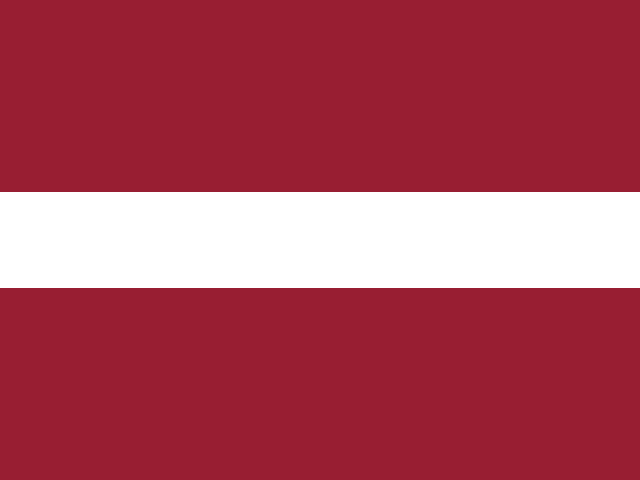
countryThe flag of Latvia was adopted on February 27, 1990. Carmine field with a narrow white band. It uses 2 colours: carmine and white. The official proportions are 1:2.
Basic Flag Information
| Flag Name | Flag of Latvia |
|---|---|
| Country | Latvia |
| Official Country Name | Republic of Latvia |
| Capital | Riga |
| Continent | Europe |
| Region | Northern Europe |
| ISO Country Code | LV / LVA |
| Internet Domain | .lv |
| Calling Code | +371 |
| Currency | Euro (EUR) |
| National Language(s) | Latvian |
| Demonym | Latvian |
| Area | 64,559 km² |
| Population | 1.9 million (2025 est.) |
Flag Specifications
| Official Flag Name | Flag of Latvia |
|---|---|
| Adopted On | February 27, 1990 |
| First Used | 1279 |
| Current Version Adopted | February 27, 1990 |
| Flag Proportion | 1:2 |
| Flag Shape | Rectangle |
| Number of Colors | 2 |
| Main Colors | Carmine, White |
| Design Type | Carmine field with a narrow white band |
| Official Status | Official National Flag |
| Government Authority | Government of Latvia |
Flag Color Information
| Color | Appearance | HEX Code | RGB | CMYK |
|---|---|---|---|---|
| Carmine | #9E3039 | 158, 48, 57 | 0, 70, 64, 38 | |
| White | #FFFFFF | 255, 255, 255 | 0, 0, 0, 0 |
Flag Design and Symbols
| Carmine colour | Represents the willingness to defend freedom, and blood |
|---|---|
| White colour | Represents honesty, truth and justice |
| Origin legend | A wounded Latvian chief was wrapped in a white sheet that was stained red on both sides, leaving a white stripe where his body lay — one of the oldest flag traditions in Europe |
Flag History
| Year / Period | Event |
|---|---|
| 1279 | The design was first used |
| 1990-02-27 | The current flag was officially adopted |
| Present | The flag remains in official use |
| Present | The flag remains in official use |
Flag Dimensions and Construction
| Official Ratio | 1:2 |
|---|---|
| Width | 1 units (hoist) |
| Length | 2 units (fly) |
Latvia Flag Usage
| Government Buildings | Yes |
|---|---|
| Schools | Yes |
| Civil Use | Yes |
| Official Ceremonies | Yes |
| Sports Events | Yes |
| National Holidays | Yes |
| Military | Yes |
| Naval Use | Yes |
| Embassies | Yes |
| International Events | Yes |
Other Official Flags of Latvia
| Flag Type | Use | Link |
|---|---|---|
| National Flag | National representation | View flag |
| Civil Flag | Used by civilians | View flag |
| State Flag | Used by government | View flag |
| War Flag | Used during military operations | View flag |
| Naval Ensign | Used by the navy | View flag |
| Air Force Flag | Used by the air force | View flag |
| Presidential Standard | Used by the head of state | View flag |
| Royal Standard | Used by the monarch | View flag |
| Historical Flag | Previous national flag | View flag |
Quick Facts About the Flag
| Flag Age | 36 years old as of 2026 |
|---|---|
| Adoption Date | February 27, 1990 |
| Oldest Version | 1279 |
| Most Common Color | Carmine |
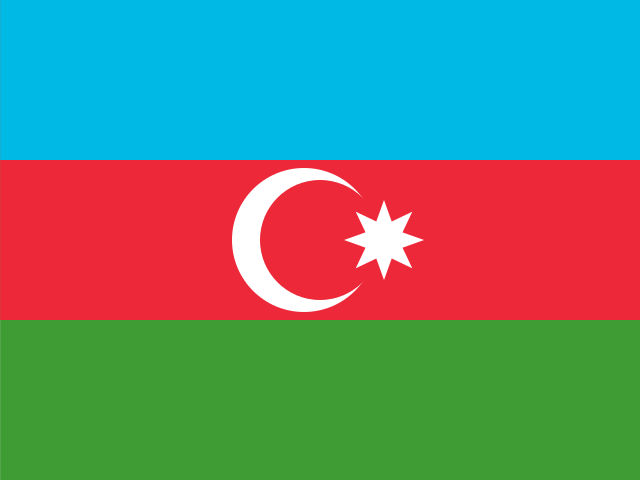
| Similar Flags | Austria, Azerbaijan, Bonaire, Sint Eustatius and Saba |
| Unique Feature | Carmine field with a narrow white band |
Other horizontal tricolour flags
See all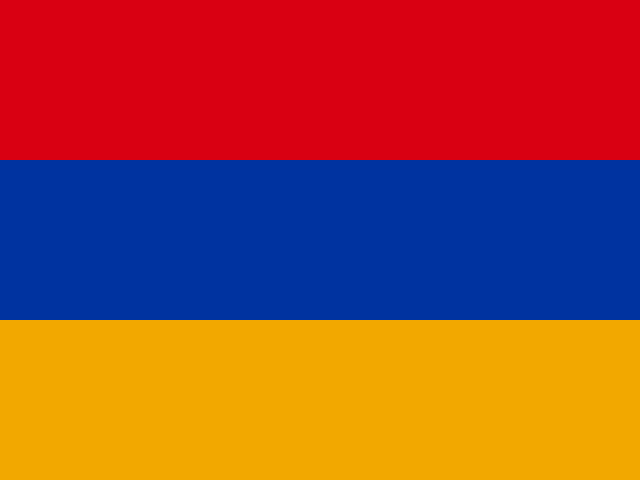
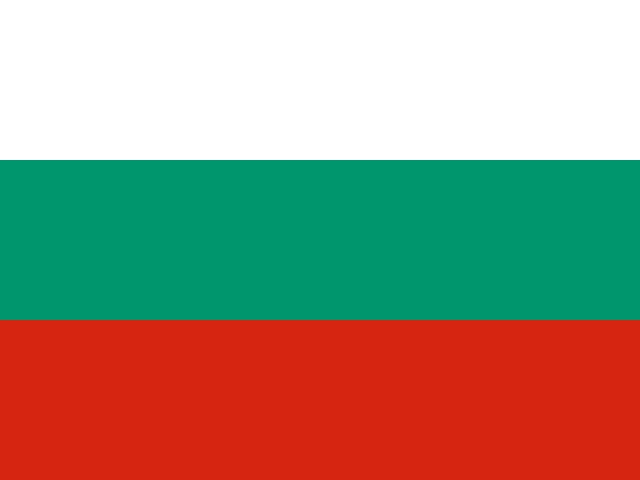
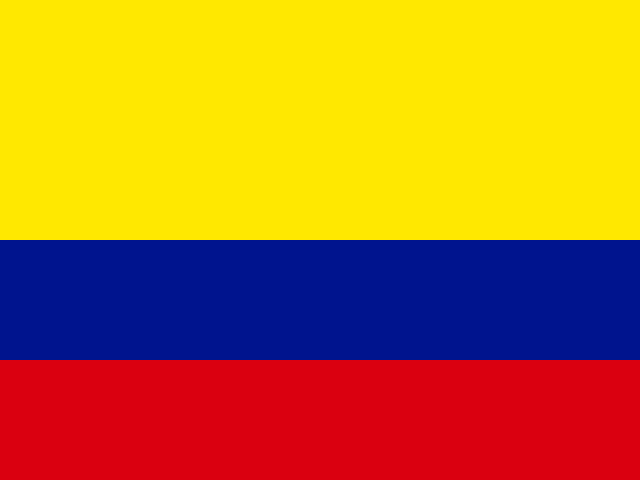
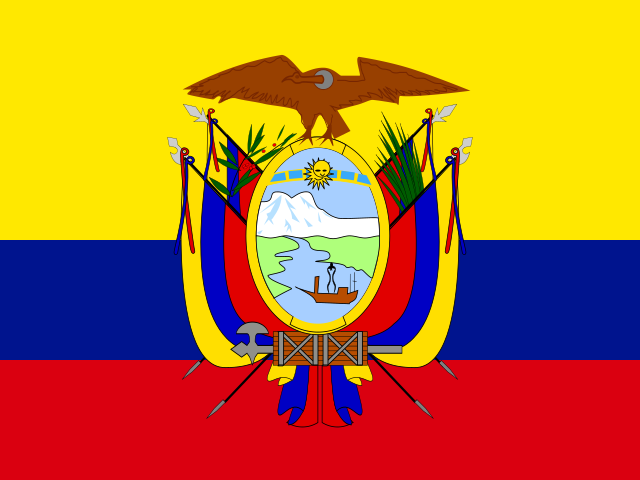
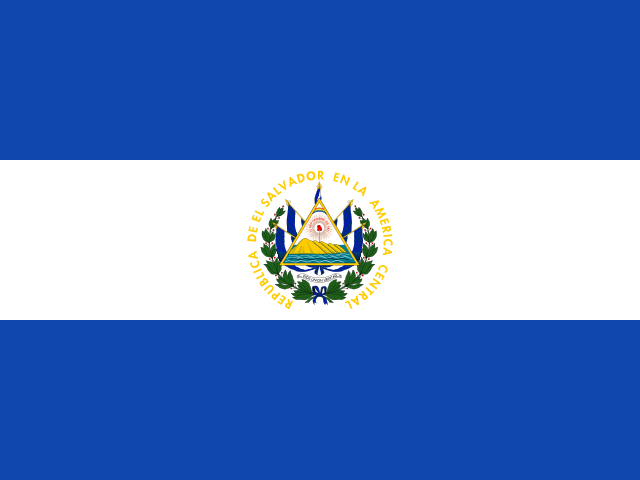

Facts about the Flag of Latvia
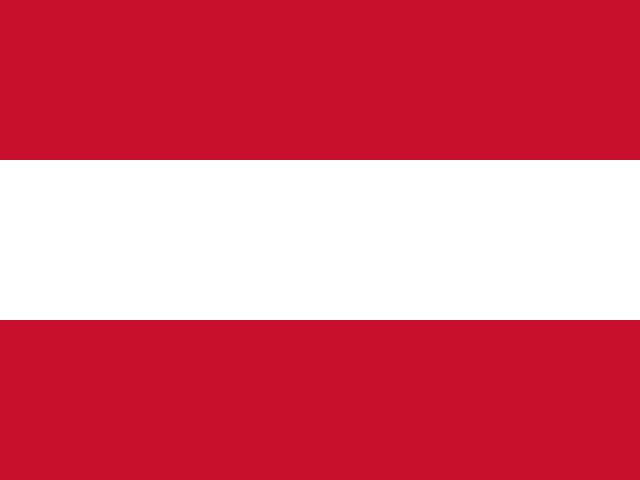
- The carmine shade is officially specified and is noticeably darker than ordinary red, which is what distinguishes the flag from Austria's.
- The centre white band is narrower than the two red bands, in a 2:1:2 arrangement rather than equal thirds.
- The design was reconstructed in 1917 from a description in a thirteenth-century chronicle, making it one of very few modern flags built from a medieval text.
- The flag of Latvia was officially adopted on February 27, 1990.
- The design is older than its adoption. It was already in use in 1279, 711 years before it was formally made the flag of Latvia.
- The flag in its present form is 36 years old as of 2026.
- Design type: Carmine field with a narrow white band.
- The official proportions are 1:2. It shares that ratio with 54 national flags.
- The flag uses 2 colours: carmine and white.
- The carmine on the flag stands for the willingness to defend freedom, and blood.
- The white on the flag stands for honesty, truth and justice.
- Origin legend: A wounded Latvian chief was wrapped in a white sheet that was stained red on both sides, leaving a white stripe where his body lay — one of the oldest flag traditions in Europe.
- The design belongs to the "Horizontal tricolour" family, shared with 32 other flags in this reference.
- Flags most often confused with it: Austria, Azerbaijan and Bonaire, Sint Eustatius and Saba.
- Latvia became independent on 21 August 1991 from the Soviet Union.
- Latvia first declared independence on 18 November 1918 and restored it fully in 1991.
- Ice hockey and basketball are the most popular sports.
- The national animal is the white wagtail, the national bird.
Frequently Asked Questions about the Flag of Latvia
When was the flag of Latvia adopted?
The flag of Latvia was officially adopted on February 27, 1990, though the design had already been in use since 1279.
What do the colours of the flag of Latvia mean?
Carmine for the willingness to defend freedom, and blood and white for honesty, truth and justice.
When did Latvia gain independence?
Latvia became independent on 21 August 1991 from the Soviet Union. Latvia first declared independence on 18 November 1918 and restored it fully in 1991.
What is the national sport of Latvia?
Ice hockey and basketball are the most popular sports.
What do the symbols on the flag of Latvia represent?
Origin legend — A wounded Latvian chief was wrapped in a white sheet that was stained red on both sides, leaving a white stripe where his body lay — one of the oldest flag traditions in Europe.
What are the proportions of the flag of Latvia?
The official ratio is 1:2, which makes the flag rectangular. It shares those proportions with 54 national flags.
What is the national anthem of Latvia?
The national anthem is "Dievs, svētī Latviju!".
When is the national day of Latvia?
It falls on 18 November, Proclamation Day, and the flag is flown across the country.
What is the national animal of Latvia?
The national animal is the white wagtail, the national bird.
What is the capital of Latvia?
The capital is Riga. The currency is the Euro (EUR) and the language spoken is Latvian.