United Nations Flag
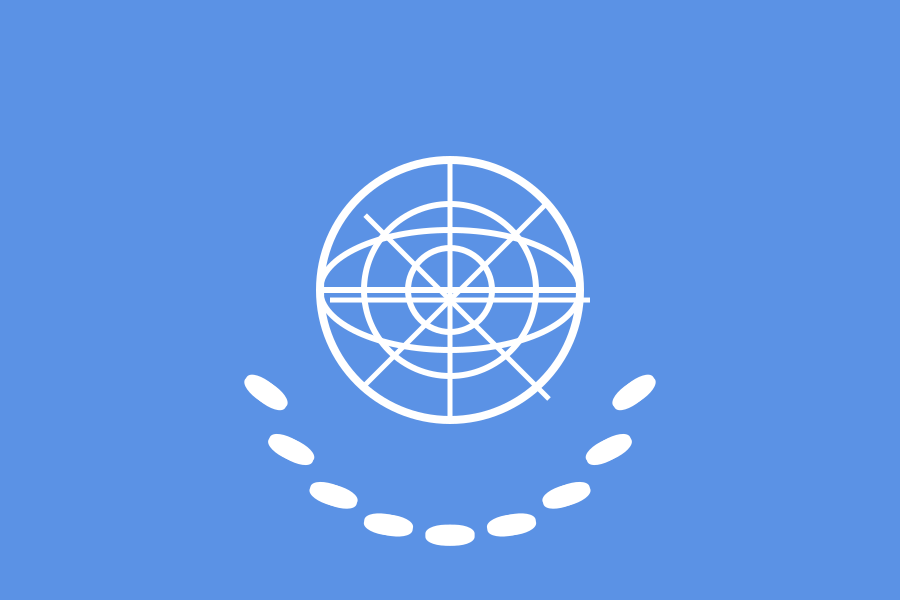
International Organisation FlagsThe flag of the United Nations, adopted in 1946. It has since become a general emblem of international cooperation.
Basic Flag Information
| Flag Name | United Nations Flag |
|---|---|
| Category | International Organisation Flags |
| Adopted On | December 7, 1946 |
| Designer | Donal McLaughlin and team |
| Flag Proportion | 2:3 |
| Flag Shape | Rectangle |
| Number of Colors | 2 |
| Main Colors | UN Blue, White |
| Design Type | Light blue field with a white world map and olive wreath |
Flag Color Information
| Color | Appearance | HEX Code |
|---|---|---|
| UN Blue | #5B92E5 | |
| White | #FFFFFF |
Flag Design and Symbols
| UN Blue colour | Represents peace, chosen as the opposite of red, the colour of war |
|---|---|
| White colour | Represents the map and wreath |
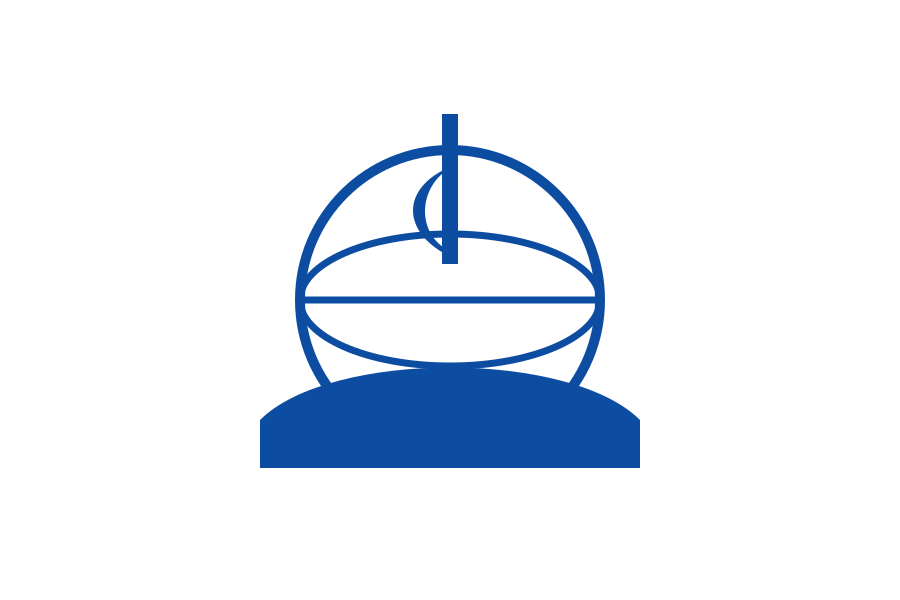
| Azimuthal map | The world seen from the North Pole, showing all inhabited land and deliberately excluding Antarctica so no nation is at the centre |
| Olive branches | Peace |
Facts about the Flag of United Nations Flag
- The map uses an azimuthal equidistant projection centred on the North Pole, chosen so that no country sits at the centre and none is cut off at the edge.
- The emblem was created for the 1945 San Francisco conference; the flag itself was adopted in 1947, and the map was rotated from its original orientation on the date line.
- The blue was deliberately chosen as the opposite of red, the colour associated with war.
- The flag of the United Nations, adopted in 1946. It has since become a general emblem of international cooperation.
- The flag belongs to the United Nations. It is used worldwide.
- It was founded on 24 October 1945.
- It is based in New York, with major offices in Geneva, Vienna and Nairobi.
- It has 193 member states.
- It flies at UN headquarters and offices, at peacekeeping missions and alongside national flags at many international events.
- The flag was adopted in December 7, 1946. It was designed by Donal McLaughlin and team.
- The design is 80 years old as of 2026.
- Construction: Light blue field with a white world map and olive wreath.
- It is normally drawn to a ratio of 2:3, which makes it rectangular.
- The flag uses 2 colours: UN Blue and white.
- The UN Blue stands for peace, chosen as the opposite of red, the colour of war.
- The white stands for the map and wreath.
- Azimuthal map: The world seen from the North Pole, showing all inhabited land and deliberately excluding Antarctica so no nation is at the centre.
- Olive branches: Peace.
Frequently asked questions about the United Nations Flag
What is the United Nations Flag?
The flag of the United Nations, adopted in 1946. It has since become a general emblem of international cooperation.
Whose flag is the United Nations Flag?
It is the flag of the United Nations, used worldwide.
When was the United Nations founded?
The United Nations was founded on 24 October 1945.
When was the United Nations Flag adopted?
The United Nations Flag was adopted in December 7, 1946 and was designed by Donal McLaughlin and team.
What do the colours of the United Nations Flag mean?
UN Blue for peace, chosen as the opposite of red, the colour of war and white for the map and wreath.
What do the symbols on the United Nations Flag mean?
Azimuthal map — The world seen from the North Pole, showing all inhabited land and deliberately excluding Antarctica so no nation is at the centre. Olive branches — Peace.
Where is the United Nations Flag flown?
It flies at UN headquarters and offices, at peacekeeping missions and alongside national flags at many international events.
Where is it based and how large is it?
It is based in New York, with major offices in Geneva, Vienna and Nairobi and it has 193 member states.
What are the proportions of the United Nations Flag?
It is normally drawn to a ratio of 2:3, which makes it rectangular.
What else is worth knowing about the United Nations Flag?
The flag was adopted on 20 October 1947; UN blue was chosen as the opposite of red, the colour of war.