Esperanto Flag
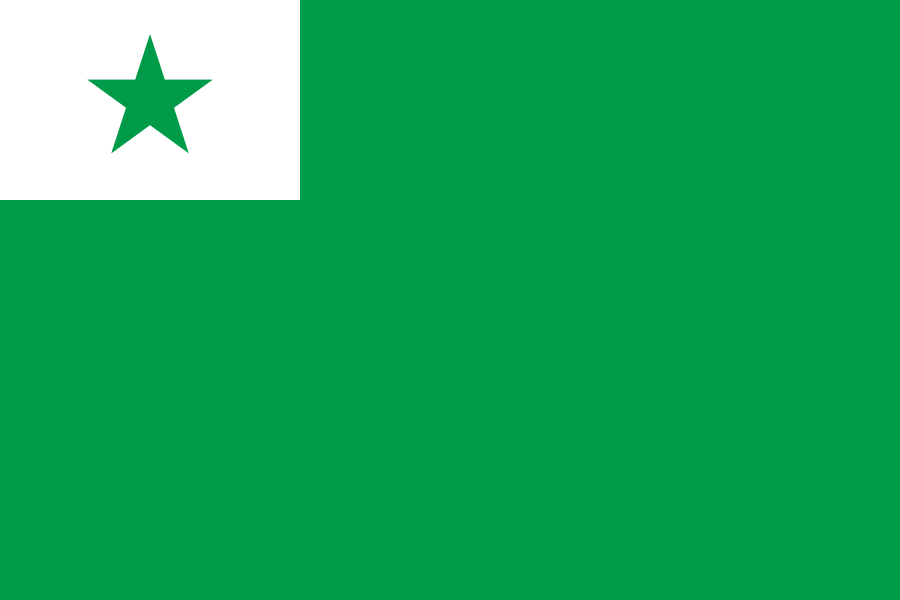
International Organisation FlagsThe flag of the Esperanto movement, approved at the first World Esperanto Congress in 1905.
Basic Flag Information
| Flag Name | Esperanto Flag |
|---|---|
| Category | International Organisation Flags |
| Adopted On | 1905 |
| Flag Proportion | 2:3 |
| Flag Shape | Rectangle |
| Number of Colors | 2 |
| Main Colors | Green, White |
| Design Type | Green field with a white canton bearing a green star |
Flag Color Information
| Color | Appearance | HEX Code |
|---|---|---|
| Green | #009B48 | |
| White | #FFFFFF |
Flag Design and Symbols
| Green colour | Represents hope — Esperanto means “one who hopes” |
|---|---|
| White colour | Represents peace and neutrality |
| Five-pointed green star | The five inhabited continents joined by a common language |
Facts about the Flag of Esperanto Flag
- The green star on white in the canton has represented the Esperanto movement since 1905, with the five points standing for the five continents.
- The flag of the Esperanto movement, approved at the first World Esperanto Congress in 1905.
- The flag belongs to the Esperanto movement. It is used worldwide.
- It was founded in 1887, when the language was published by L. L. Zamenhof.
- The flag was adopted in 1905.
- The design is 121 years old as of 2026.
- Construction: Green field with a white canton bearing a green star.
- It is normally drawn to a ratio of 2:3, which makes it rectangular.
- The flag uses 2 colours: green and white.
- The green stands for hope — Esperanto means “one who hopes”.
- The white stands for peace and neutrality.
- Five-pointed green star: The five inhabited continents joined by a common language.
- The flag was approved at the first World Esperanto Congress at Boulogne-sur-Mer in 1905; the green star has five points for the five continents.
- It is filed here under International Organisation Flags, one of the categories of flag that belong to no country.
Frequently asked questions about the Esperanto Flag
What is the Esperanto Flag?
The flag of the Esperanto movement, approved at the first World Esperanto Congress in 1905.
Whose flag is the Esperanto Flag?
It is the flag of the Esperanto movement, used worldwide.
When was the Esperanto movement founded?
The Esperanto movement was founded in 1887, when the language was published by L. L. Zamenhof.
When was the Esperanto Flag adopted?
The Esperanto Flag was adopted in 1905.
What do the colours of the Esperanto Flag mean?
Green for hope — Esperanto means “one who hopes” and white for peace and neutrality.
What do the symbols on the Esperanto Flag mean?
Five-pointed green star — The five inhabited continents joined by a common language.
What are the proportions of the Esperanto Flag?
It is normally drawn to a ratio of 2:3, which makes it rectangular.
What else is worth knowing about the Esperanto Flag?
The flag was approved at the first World Esperanto Congress at Boulogne-sur-Mer in 1905; the green star has five points for the five continents.
Is the Esperanto Flag a national flag?
No. It is not the flag of any sovereign state and is listed here under International Organisation Flags.
How many colours are on the Esperanto Flag?
It uses 2 colours: green and white.