
Flag of Brazil
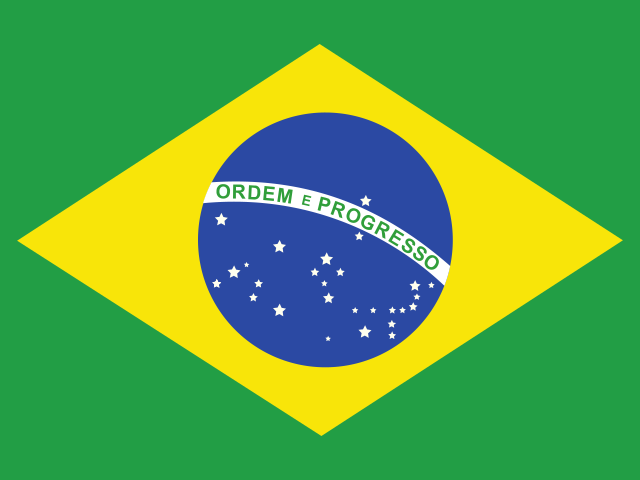
countryThe flag of Brazil was adopted on May 11, 1992 to a design by Raimundo Teixeira Mendes and others. Green field with a yellow rhombus and a starry blue globe. It uses 4 colours: green, yellow, blue and white. The official proportions are 7:10.
Basic Flag Information
| Flag Name | Flag of Brazil |
|---|---|
| Country | Brazil |
| Official Country Name | Federative Republic of Brazil |
| Capital | Brasília |
| Continent | Americas |
| Region | South America |
| ISO Country Code | BR / BRA |
| Internet Domain | .br |
| Calling Code | +55 |
| Currency | Brazilian real (BRL) |
| National Language(s) | Portuguese |
| Demonym | Brazilian |
| Area | 8,515,767 km² |
| Population | 213 million (2025 est.) |
Flag Specifications
| Official Flag Name | Flag of Brazil |
|---|---|
| Adopted On | May 11, 1992 |
| First Used | November 19, 1889 |
| Current Version Adopted | May 11, 1992 |
| Flag Proportion | 7:10 |
| Flag Shape | Rectangle |
| Number of Colors | 4 |
| Main Colors | Green, Yellow, Blue, White |
| Designer | Raimundo Teixeira Mendes and others |
| Design Type | Green field with a yellow rhombus and a starry blue globe |
| Official Status | Official National Flag |
| Government Authority | Government of Brazil |
Flag Color Information
| Color | Appearance | HEX Code | RGB | CMYK |
|---|---|---|---|---|
| Green | #009B3A | 0, 155, 58 | 100, 0, 63, 39 | |
| Yellow | #FEDF00 | 254, 223, 0 | 0, 12, 100, 0 | |
| Blue | #002776 | 0, 39, 118 | 100, 67, 0, 54 | |
| White | #FFFFFF | 255, 255, 255 | 0, 0, 0, 0 |
Flag Design and Symbols
| Green colour | Represents the House of Braganza and the forests |
|---|---|
| Yellow colour | Represents the House of Habsburg and the country’s gold |
| Blue colour | Represents the sky over Rio de Janeiro |
| White colour | Represents the motto band and the stars |
| 27 stars | The 26 states and the Federal District, arranged as the sky over Rio on the morning of 15 November 1889 |
| Motto | “Ordem e Progresso” — Order and Progress, drawn from Auguste Comte’s positivist philosophy |
Flag History
| Year / Period | Event |
|---|---|
| 1889-11-19 | The design was first used |
| 1992-05-11 | The current flag was officially adopted |
| Present | The flag remains in official use |
| Present | The flag remains in official use |
Flag Dimensions and Construction
| Official Ratio | 7:10 |
|---|---|
| Width | 7 units (hoist) |
| Length | 10 units (fly) |
Brazil Flag Usage
| Government Buildings | Yes |
|---|---|
| Schools | Yes |
| Civil Use | Yes |
| Official Ceremonies | Yes |
| Sports Events | Yes |
| National Holidays | Yes |
| Military | Yes |
| Naval Use | Yes |
| Embassies | Yes |
| International Events | Yes |
Other Official Flags of Brazil
| Flag Type | Use | Link |
|---|---|---|
| National Flag | National representation | View flag |
| Civil Flag | Used by civilians | View flag |
| State Flag | Used by government | View flag |
| War Flag | Used during military operations | View flag |
| Naval Ensign | Used by the navy | View flag |
| Air Force Flag | Used by the air force | View flag |
| Presidential Standard | Used by the head of state | View flag |
| Royal Standard | Used by the monarch | View flag |
| Historical Flag | Previous national flag | View flag |
Quick Facts About the Flag
| Flag Age | 34 years old as of 2026 |
|---|---|
| Adoption Date | May 11, 1992 |
| Oldest Version | November 19, 1889 |
| Flag Nickname | Auriverde (the gold and green) |
| Designer | Raimundo Teixeira Mendes and others |
| Most Common Color | Green |
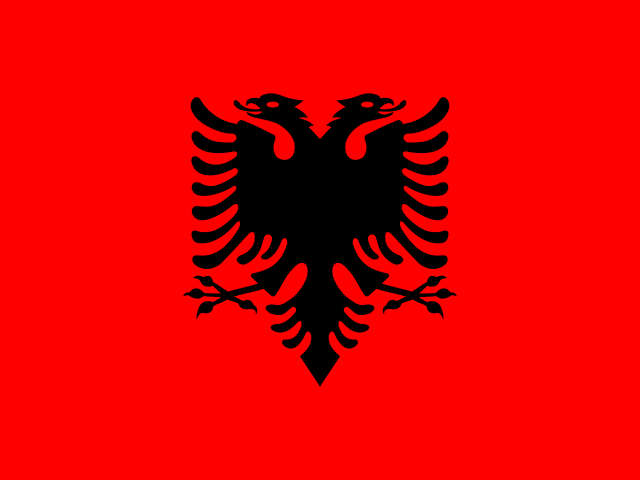
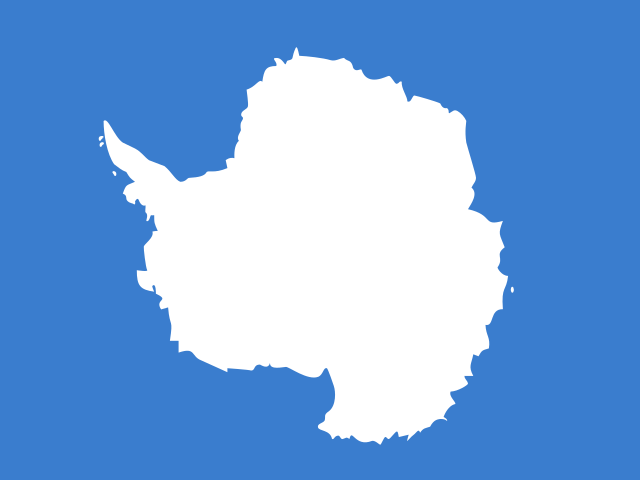
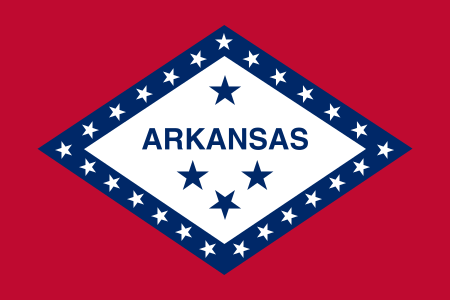
| Similar Flags | Alaska, Antarctica, Arkansas |
| Unique Feature | Green field with a yellow rhombus and a starry blue globe |
Other plain field with a central emblem flags
See all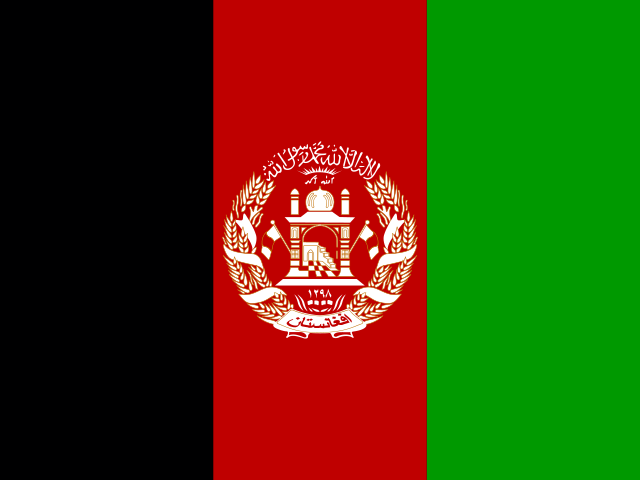


Facts about the Flag of Brazil
- The twenty-seven stars are a real star map: the sky over Rio de Janeiro on the morning of 15 November 1889, drawn as if viewed from outside the celestial sphere, so it appears mirrored.
- Stars have been added as states were created, most recently in 1992. Each star is assigned to a specific state or to the Federal District.
- The green and yellow are usually explained as the houses of Braganza and Habsburg, from the imperial period, rather than as forest and gold — a reading that arrived later.
- The motto Ordem e Progresso is taken from Auguste Comte's positivist philosophy, which was influential among the officers who founded the republic.
- The flag of Brazil was officially adopted on May 11, 1992. It was designed by Raimundo Teixeira Mendes and others.
- The design is older than its adoption. It was already in use in 1889, 103 years before it was formally made the flag of Brazil.
- The flag in its present form is 34 years old as of 2026.
- Design type: Green field with a yellow rhombus and a starry blue globe.
- The flag is known as Auriverde (the gold and green), a name used far more often than the formal "flag of Brazil".
- The official proportions are 7:10. It shares that ratio with 1 national flag.
- The flag uses 4 colours: green, yellow, blue and white.
- The green on the flag stands for the House of Braganza and the forests.
- The yellow on the flag stands for the House of Habsburg and the country’s gold.
- The blue on the flag stands for the sky over Rio de Janeiro.
- 27 stars: The 26 states and the Federal District, arranged as the sky over Rio on the morning of 15 November 1889.
- Motto: “Ordem e Progresso” — Order and Progress, drawn from Auguste Comte’s positivist philosophy.
- The design belongs to the "Plain field with a central emblem" family, shared with 70 other flags in this reference.
- Flags most often confused with it: Alaska, Antarctica and Arkansas.
Frequently Asked Questions about the Flag of Brazil
When was the flag of Brazil adopted?
The flag of Brazil was officially adopted on May 11, 1992, though the design had already been in use since 1889.
What do the colours of the flag of Brazil mean?
Green for the House of Braganza and the forests, yellow for the House of Habsburg and the country’s gold, blue for the sky over Rio de Janeiro and white for the motto band and the stars.
When did Brazil gain independence?
Brazil became independent on 7 September 1822 from Portugal.
What is the national sport of Brazil?
Football is the national sport; capoeira is recognised as national intangible heritage.
What do the symbols on the flag of Brazil represent?
27 stars — The 26 states and the Federal District, arranged as the sky over Rio on the morning of 15 November 1889. Motto — “Ordem e Progresso” — Order and Progress, drawn from Auguste Comte’s positivist philosophy.
Who designed the flag of Brazil?
The flag was designed by Raimundo Teixeira Mendes and others.
What are the proportions of the flag of Brazil?
The official ratio is 7:10, which makes the flag rectangular. It shares those proportions with 1 national flag.
What is the national anthem of Brazil?
The national anthem is "Hino Nacional Brasileiro".
When is the national day of Brazil?
It falls on 7 September, Independence Day, and the flag is flown across the country.
What is the national animal of Brazil?
The national animal is the rufous-bellied thrush, with the jaguar as national mammal.