
Flag of South Carolina
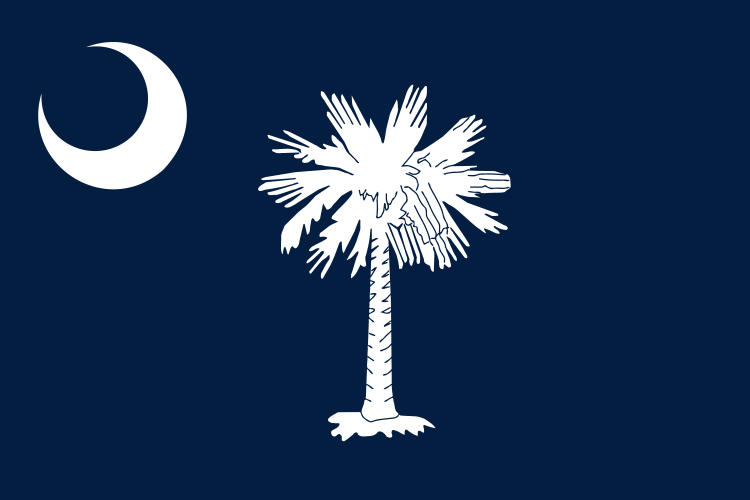
stateThe flag of South Carolina was adopted on January 28, 1861. Indigo field with a white crescent and palmetto tree. It uses 2 colours: indigo and white. The official proportions are 2:3.
Basic Flag Information
| Flag Name | Flag of South Carolina |
|---|---|
| Country | South Carolina |
| Official Country Name | State of South Carolina |
| Continent | North America |
| Region | United States |
| ISO Country Code | US-SC |
| Internet Domain | .us |
| Calling Code | +1 |
| Currency | United States dollar (USD) |
| National Language(s) | English |
Flag Specifications
| Official Flag Name | Flag of South Carolina |
|---|---|
| Adopted On | January 28, 1861 |
| Current Version Adopted | January 28, 1861 |
| Flag Proportion | 2:3 |
| Flag Shape | Rectangle |
| Number of Colors | 2 |
| Main Colors | Indigo, White |
| Design Type | Indigo field with a white crescent and palmetto tree |
| Official Status | Official State Flag |
| Government Authority | State Government of South Carolina |
Flag Color Information
| Color | Appearance | HEX Code | RGB | CMYK |
|---|---|---|---|---|
| Indigo | #003366 | 0, 51, 102 | 100, 50, 0, 60 | |
| White | #FFFFFF | 255, 255, 255 | 0, 0, 0, 0 |
Flag Design and Symbols
| Indigo colour | Represents the uniforms of the state’s Revolutionary troops |
|---|---|
| White colour | Represents the crescent and palmetto |
| Palmetto tree | The palmetto-log fort on Sullivan’s Island that absorbed British cannonballs in 1776 |
| Crescent | The silver emblem worn on the caps of the state’s Revolutionary soldiers — a gorget, not a moon |
Flag History
| Year / Period | Event |
|---|---|
| 1861-01-28 | The current flag was officially adopted |
| Present | The flag remains in official use |
| Present | The flag remains in official use |
Flag Dimensions and Construction
| Official Ratio | 2:3 |
|---|---|
| Width | 2 units (hoist) |
| Length | 3 units (fly) |
South Carolina Flag Usage
| Government Buildings | Yes |
|---|---|
| Schools | Yes |
| Civil Use | Yes |
| Official Ceremonies | Yes |
| Sports Events | Yes |
Other Official Flags of South Carolina
| Flag Type | Use | Link |
|---|---|---|
| National Flag | National representation | View flag |
| Civil Flag | Used by civilians | View flag |
| State Flag | Used by government | View flag |
| War Flag | Used during military operations | View flag |
| Naval Ensign | Used by the navy | View flag |
| Air Force Flag | Used by the air force | View flag |
| Presidential Standard | Used by the head of state | View flag |
| Royal Standard | Used by the monarch | View flag |
| Historical Flag | Previous national flag | View flag |
Quick Facts About the Flag
| Flag Age | 165 years old as of 2026 |
|---|---|
| Adoption Date | January 28, 1861 |
| Most Common Color | Indigo |
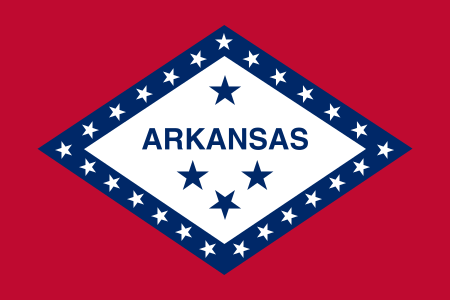
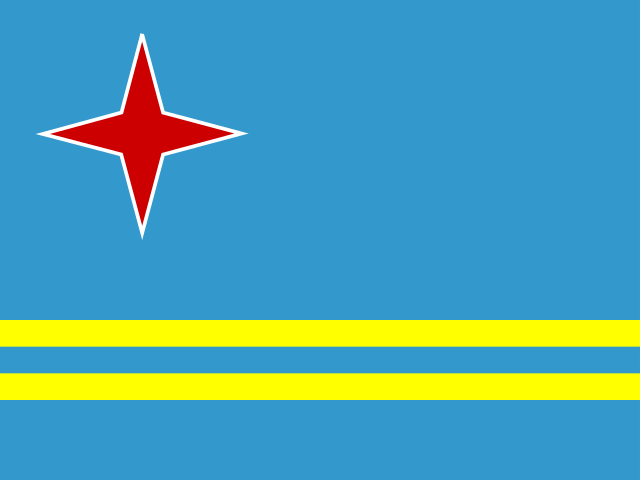
| Similar Flags | Antarctica, Arkansas, Aruba |
| Unique Feature | Indigo field with a white crescent and palmetto tree |
Other plain field with a central emblem flags
See all


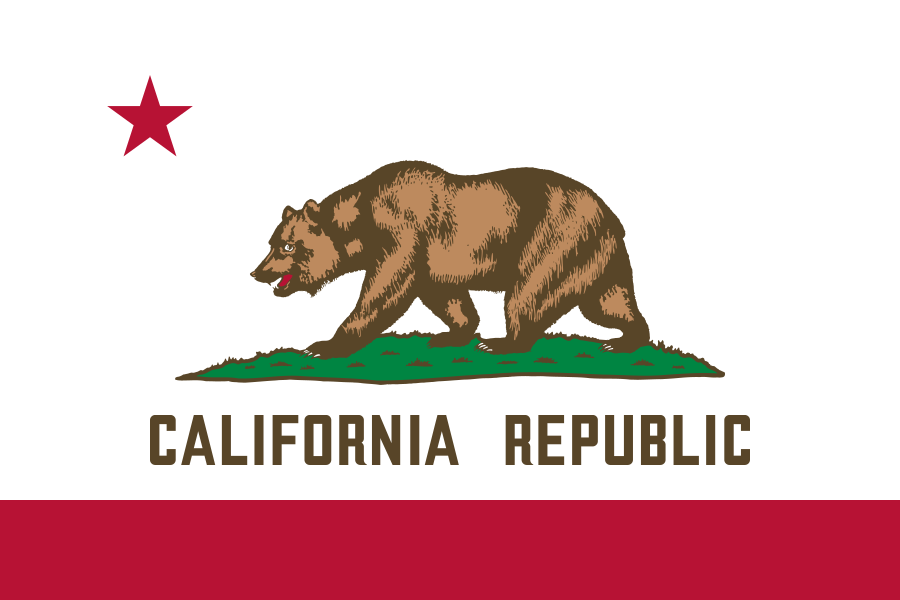
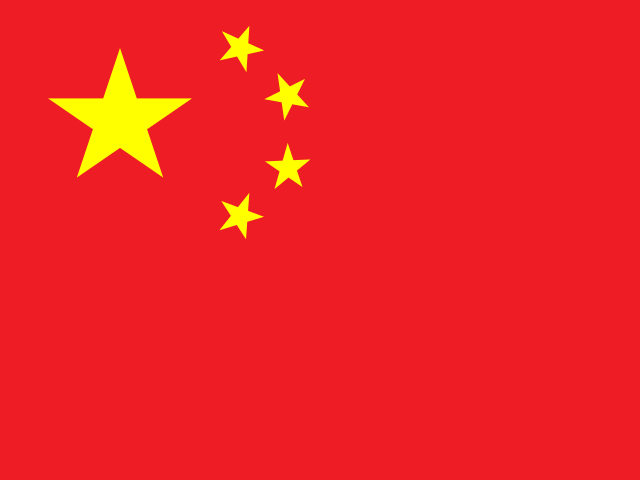
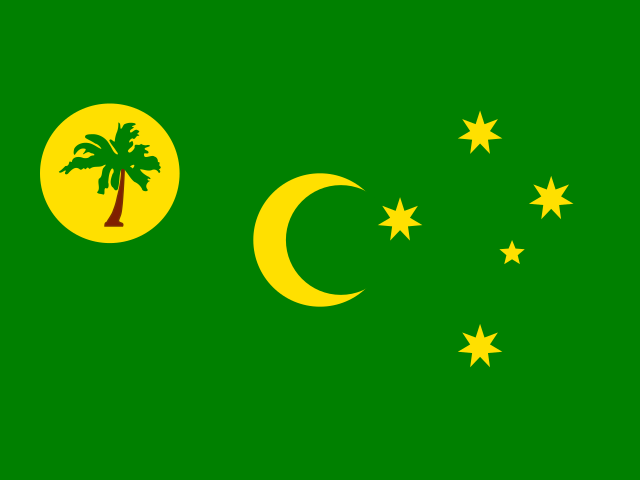
Facts about the Flag of South Carolina
- The palmetto commemorates a fort on Sullivan's Island built from palmetto logs, which absorbed British cannon fire in 1776 instead of splintering.
- The crescent is not a moon. It reproduces the silver gorget worn on the caps of Revolutionary War troops, and its original meaning is genuinely uncertain.
- The exact shape of the palmetto and crescent was only standardised in 2021, after decades in which manufacturers produced noticeably different versions.
- The flag of South Carolina was officially adopted on January 28, 1861.
- The flag in its present form is 165 years old as of 2026.
- Design type: Indigo field with a white crescent and palmetto tree.
- The official proportions are 2:3. It shares that ratio with 83 national flags.
- The flag uses 2 colours: indigo and white.
- The indigo on the flag stands for the uniforms of the state’s Revolutionary troops.
- The white on the flag stands for the crescent and palmetto.
- Palmetto tree: The palmetto-log fort on Sullivan’s Island that absorbed British cannonballs in 1776.
- Crescent: The silver emblem worn on the caps of the state’s Revolutionary soldiers — a gorget, not a moon.
- The design belongs to the "Plain field with a central emblem" family, shared with 70 other flags in this reference.
- Flags most often confused with it: Antarctica, Arkansas and Aruba.
- South Carolina joined the Union on 23 May 1788, as the 8th state.
- Stock car racing is the official state sport.
- The state is nicknamed The Palmetto State.
- The state bird is the Carolina wren.
Frequently Asked Questions about the Flag of South Carolina
When was the flag of South Carolina adopted?
The flag of South Carolina was officially adopted on January 28, 1861.
What do the colours of the flag of South Carolina mean?
Indigo for the uniforms of the state’s Revolutionary troops and white for the crescent and palmetto.
When did South Carolina become a state?
South Carolina entered the Union on 23 May 1788, as the 8th state.
What is the state sport of South Carolina?
Stock car racing is the official state sport.
What do the symbols on the flag of South Carolina represent?
Palmetto tree — The palmetto-log fort on Sullivan’s Island that absorbed British cannonballs in 1776. Crescent — The silver emblem worn on the caps of the state’s Revolutionary soldiers — a gorget, not a moon.
What are the proportions of the flag of South Carolina?
The official ratio is 2:3, which makes the flag rectangular. It shares those proportions with 83 national flags.
What are the state symbols of South Carolina?
The state bird is the Carolina wren, the state flower is the yellow jessamine and the motto is "Dum spiro spero — While I breathe, I hope".
Which flags look similar to the flag of South Carolina?
The closest matches are Antarctica, Arkansas and Aruba, which share both the construction and most of the colours.
How many colours are on the flag of South Carolina?
It uses 2 colours: indigo and white.
Can I download the flag of South Carolina for free?
Yes. This page offers the flag of South Carolina in SVG, PNG, JPG and WebP at several sizes. The files are free to use for any purpose and no attribution is required.