Flag of India
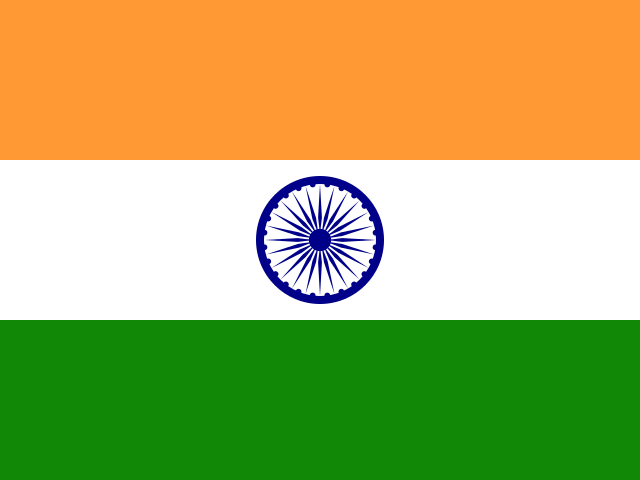
countryThe flag of India was adopted on July 22, 1947 to a design by Pingali Venkayya (based on his earlier design). Horizontal tricolour with a navy chakra. It uses 4 colours: india saffron, white, india green and navy blue. The official proportions are 2:3.
Basic Flag Information
| Flag Name | Flag of India |
|---|---|
| Country | India |
| Official Country Name | Republic of India |
| Capital | New Delhi |
| Continent | Asia |
| Region | Southern Asia |
| ISO Country Code | IN / IND |
| Internet Domain | .in |
| Calling Code | +91 |
| Currency | Indian rupee (INR) |
| National Language(s) | English, Hindi, Tamil |
| Demonym | Indian |
| Area | 3,287,590 km² |
| Population | 1.46 billion (2025 est.) |
Flag Specifications
| Official Flag Name | Flag of India |
|---|---|
| Adopted On | July 22, 1947 |
| First Used | 1947 |
| Current Version Adopted | July 22, 1947 |
| Flag Proportion | 2:3 |
| Flag Shape | Rectangle |
| Number of Colors | 4 |
| Main Colors | India Saffron, White, India Green, Navy Blue |
| Designer | Pingali Venkayya (based on his earlier design) |
| Design Type | Horizontal tricolour with a navy chakra |
| Official Status | Official National Flag |
| Government Authority | Government of India |
Flag Color Information
| Color | Appearance | HEX Code | RGB | CMYK |
|---|---|---|---|---|
| India Saffron | #FF9933 | 255, 153, 51 | 0, 40, 80, 0 | |
| White | #FFFFFF | 255, 255, 255 | 0, 0, 0, 0 | |
| India Green | #138808 | 19, 136, 8 | 86, 0, 94, 47 | |
| Navy Blue | #000080 | 0, 0, 128 | 100, 100, 0, 50 |
Flag Design and Symbols
| India Saffron colour | Represents courage and sacrifice |
|---|---|
| White colour | Represents peace and truth |
| India Green colour | Represents faith, fertility and prosperity |
| Navy Blue colour | Represents the chakra |
| Ashoka Chakra | The 24-spoked wheel of law from the Lion Capital of Ashoka — the wheel of dharma, standing for continuous motion and progress |
| Khadi rule | By law the flag must be made from hand-spun khadi cloth |
Flag History
| Year / Period | Event |
|---|---|
| 1947 | The design was first used |
| 1947-07-22 | The current flag was officially adopted |
| Present | The flag remains in official use |
| Present | The flag remains in official use |
Flag Dimensions and Construction
| Official Ratio | 2:3 |
|---|---|
| Width | 2 units (hoist) |
| Length | 3 units (fly) |
India Flag Usage
| Government Buildings | Yes |
|---|---|
| Schools | Yes |
| Civil Use | Yes |
| Official Ceremonies | Yes |
| Sports Events | Yes |
| National Holidays | Yes |
| Military | Yes |
| Naval Use | Yes |
| Embassies | Yes |
| International Events | Yes |
Other Official Flags of India
| Flag Type | Use | Link |
|---|---|---|
| National Flag | National representation | View flag |
| Civil Flag | Used by civilians | View flag |
| State Flag | Used by government | View flag |
| War Flag | Used during military operations | View flag |
| Naval Ensign | Used by the navy | View flag |
| Air Force Flag | Used by the air force | View flag |
| Presidential Standard | Used by the head of state | View flag |
| Royal Standard | Used by the monarch | View flag |
| Historical Flag | Previous national flag | View flag |
Quick Facts About the Flag
| Flag Age | 79 years old as of 2026 |
|---|---|
| Adoption Date | July 22, 1947 |
| Oldest Version | 1947 |
| Flag Nickname | Tiranga (the tricolour) |
| Designer | Pingali Venkayya (based on his earlier design) |
| Most Common Color | India Saffron |
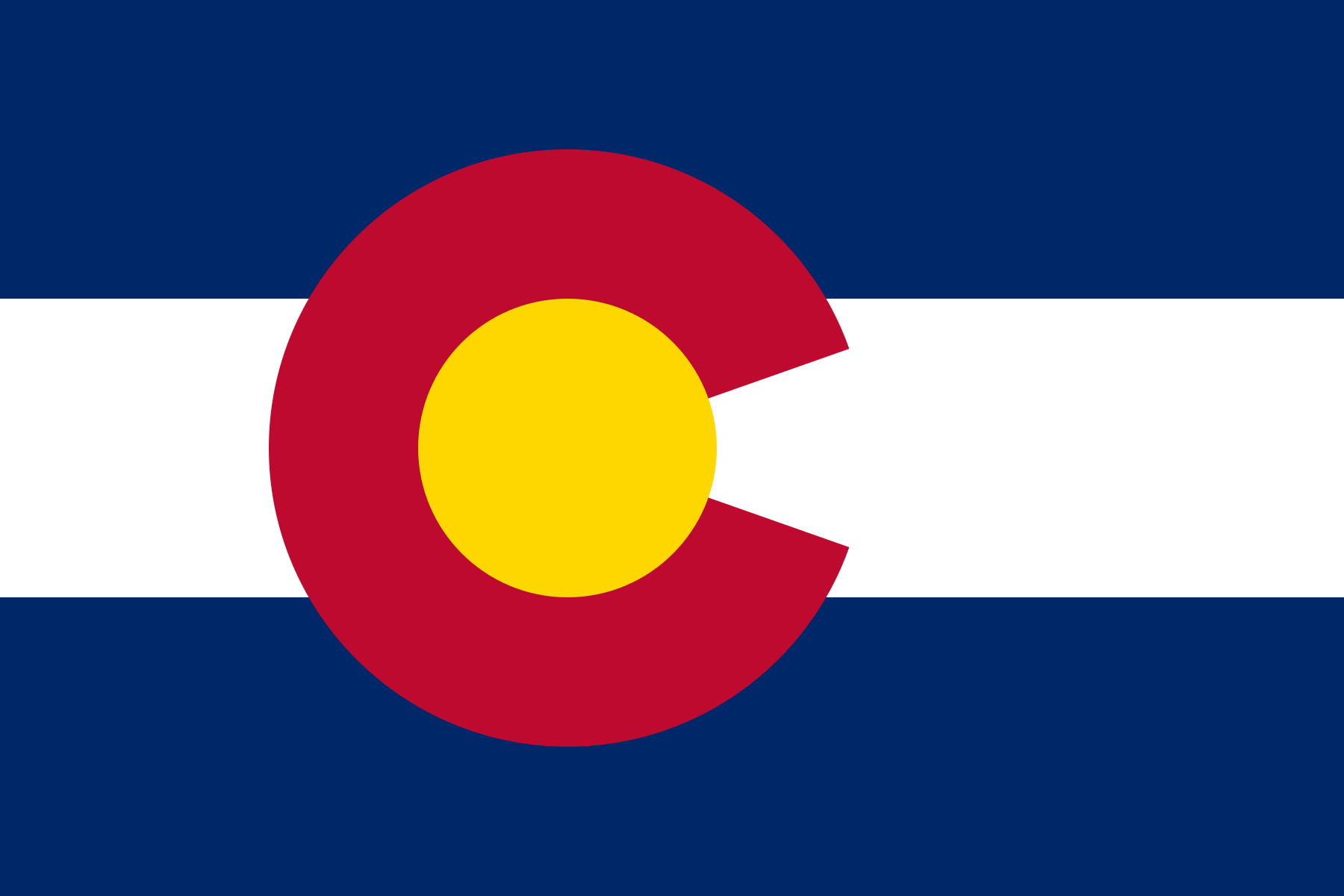
| Similar Flags | Argentina, Cambodia, Colorado |
| Unique Feature | Horizontal tricolour with a navy chakra |
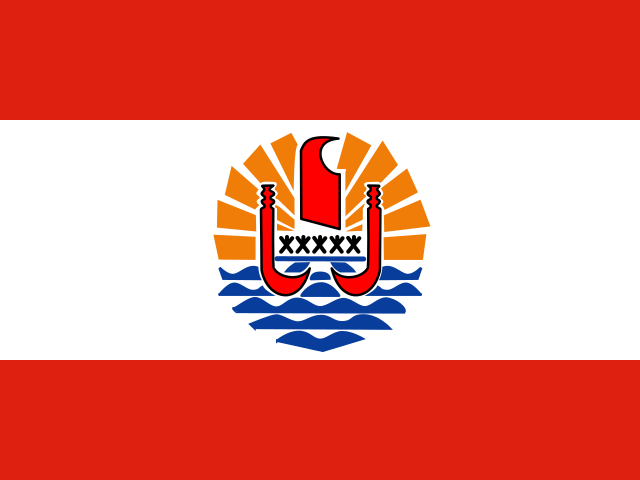
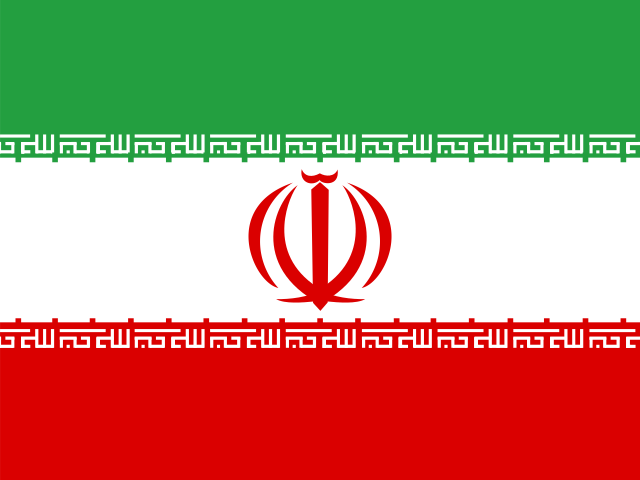
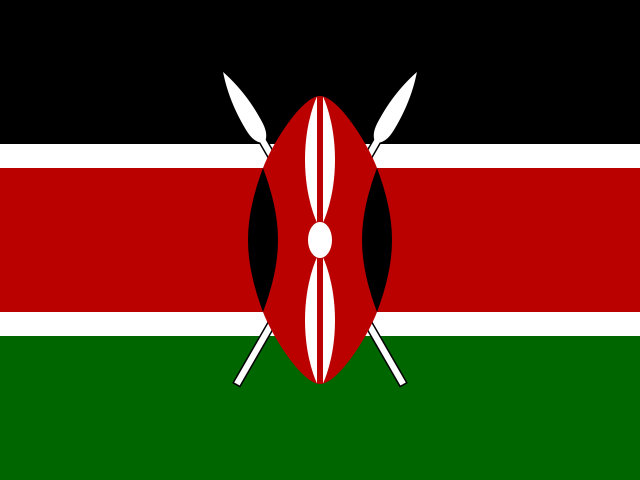
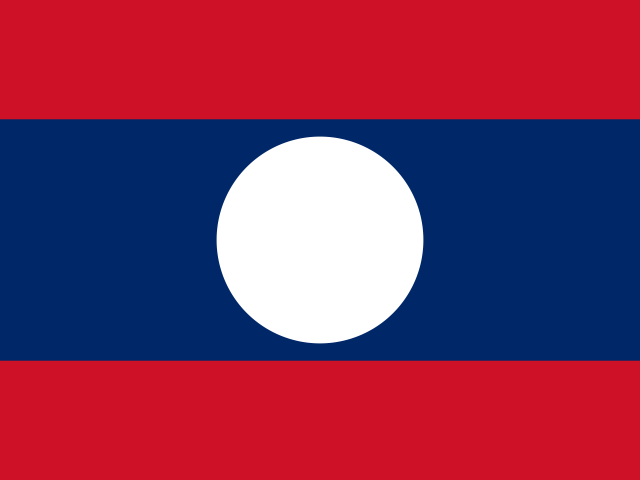
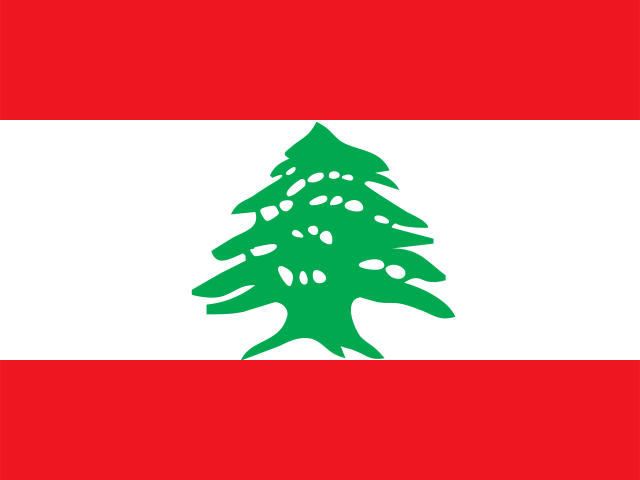
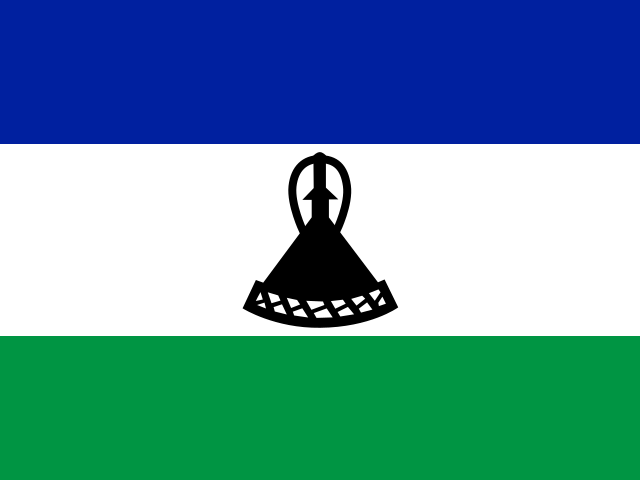
Other horizontal tricolour with a central emblem flags
See all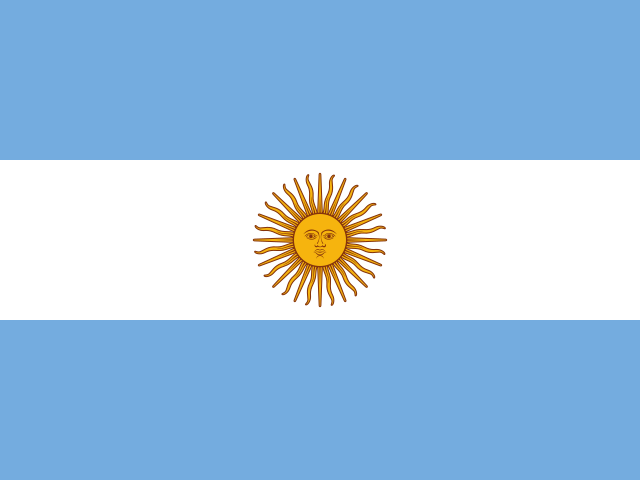
Facts about the Flag of India
- The Ashoka Chakra in the centre has twenty-four spokes and is taken from the Lion Capital of Ashoka, a third-century BCE sculpture.
- It replaced the spinning wheel of the earlier Indian National Congress flag when the design became national in 1947.
- Indian law long required the flag to be made of hand-spun khadi cloth, and the Flag Code sets out detailed rules on display that were relaxed in 2002 to allow private citizens to fly it freely.
- The flag of India was officially adopted on July 22, 1947. It was designed by Pingali Venkayya (based on his earlier design).
- The flag in its present form is 79 years old as of 2026.
- Design type: Horizontal tricolour with a navy chakra.
- The flag is known as Tiranga (the tricolour), a name used far more often than the formal "flag of India".
- The official proportions are 2:3. It shares that ratio with 82 national flags.
- The flag uses 4 colours: India Saffron, white, India Green and navy blue.
- The India Saffron on the flag stands for courage and sacrifice.
- The white on the flag stands for peace and truth.
- The India Green on the flag stands for faith, fertility and prosperity.
- Ashoka Chakra: The 24-spoked wheel of law from the Lion Capital of Ashoka — the wheel of dharma, standing for continuous motion and progress.
- Khadi rule: By law the flag must be made from hand-spun khadi cloth.
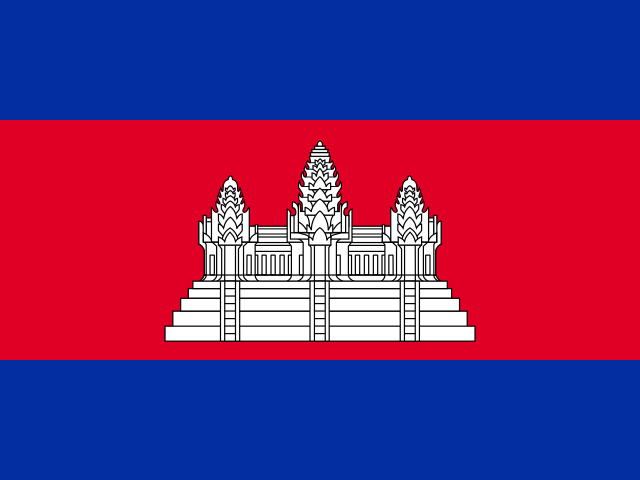
- The design belongs to the "Horizontal tricolour with a central emblem" family, shared with 19 other flags in this reference.
- Flags most often confused with it: Argentina, Cambodia and Colorado.
- India became independent on 15 August 1947 from the United Kingdom.
- India became a republic on 26 January 1950, the date it marks as Republic Day.
Frequently Asked Questions about the Flag of India
When was the flag of India adopted?
The flag of India was officially adopted on July 22, 1947.
What do the colours of the flag of India mean?
India Saffron for courage and sacrifice, white for peace and truth, India Green for faith, fertility and prosperity and navy blue for the chakra.
When did India gain independence?
India became independent on 15 August 1947 from the United Kingdom. India became a republic on 26 January 1950, the date it marks as Republic Day.
What is the national sport of India?
India has never officially declared a national sport; field hockey is traditionally described as one and cricket is by far the most popular.
What do the symbols on the flag of India represent?
Ashoka Chakra — The 24-spoked wheel of law from the Lion Capital of Ashoka — the wheel of dharma, standing for continuous motion and progress. Khadi rule — By law the flag must be made from hand-spun khadi cloth.
Who designed the flag of India?
The flag was designed by Pingali Venkayya (based on his earlier design).
What are the proportions of the flag of India?
The official ratio is 2:3, which makes the flag rectangular. It shares those proportions with 82 national flags.
What is the national anthem of India?
The national anthem is "Jana Gana Mana".
When is the national day of India?
It falls on 15 August, Independence Day, and the flag is flown across the country.
What is the national animal of India?
The national animal is the Bengal tiger, with the Indian peacock as national bird and the Ganges river dolphin as national aquatic animal.