Flag of Switzerland
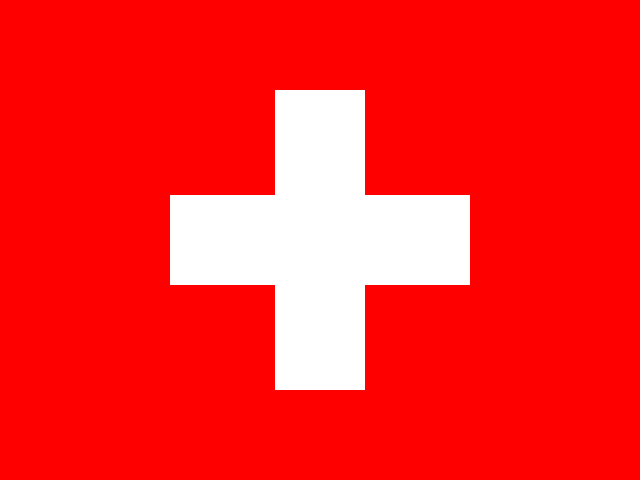
countryThe flag of Switzerland was adopted on December 12, 1889. Square red field with a white Greek cross. It uses 2 colours: red and white. The official proportions are 1:1.
Basic Flag Information
| Flag Name | Flag of Switzerland |
|---|---|
| Country | Switzerland |
| Official Country Name | Swiss Confederation |
| Capital | Bern |
| Continent | Europe |
| Region | Western Europe |
| ISO Country Code | CH / CHE |
| Internet Domain | .ch |
| Calling Code | +41 |
| Currency | Swiss franc (CHF) |
| National Language(s) | French, Italian, Romansh, Swiss German |
| Demonym | Swiss |
| Area | 41,284 km² |
| Population | 9.0 million (2025 est.) |
Flag Specifications
| Official Flag Name | Flag of Switzerland |
|---|---|
| Adopted On | December 12, 1889 |
| First Used | 1339 |
| Current Version Adopted | December 12, 1889 |
| Flag Proportion | 1:1 |
| Flag Shape | Square |
| Number of Colors | 2 |
| Main Colors | Red, White |
| Design Type | Square red field with a white Greek cross |
| Official Status | Official National Flag |
| Government Authority | Government of Switzerland |
Flag Color Information
| Color | Appearance | HEX Code | RGB | CMYK |
|---|---|---|---|---|
| Red | #FF0000 | 255, 0, 0 | 0, 100, 100, 0 | |
| White | #FFFFFF | 255, 255, 255 | 0, 0, 0, 0 |
Flag Design and Symbols
| Red colour | Represents the field |
|---|---|
| White colour | Represents the cross |
| White cross | Christianity and the Swiss Confederation, used since the Battle of Laupen in 1339 |
| Square shape | One of only two square national flags in the world, alongside Vatican City |
Flag History
| Year / Period | Event |
|---|---|
| 1339 | The design was first used |
| 1889-12-12 | The current flag was officially adopted |
| Present | The flag remains in official use |
| Present | The flag remains in official use |
Flag Dimensions and Construction
| Official Ratio | 1:1 |
|---|---|
| Width | 1 units (hoist) |
| Length | 1 units (fly) |
Switzerland Flag Usage
| Government Buildings | Yes |
|---|---|
| Schools | Yes |
| Civil Use | Yes |
| Official Ceremonies | Yes |
| Sports Events | Yes |
| National Holidays | Yes |
| Military | Yes |
| Naval Use | Yes |
| Embassies | Yes |
| International Events | Yes |
Other Official Flags of Switzerland
| Flag Type | Use | Link |
|---|---|---|
| National Flag | National representation | View flag |
| Civil Flag | Used by civilians | View flag |
| State Flag | Used by government | View flag |
| War Flag | Used during military operations | View flag |
| Naval Ensign | Used by the navy | View flag |
| Air Force Flag | Used by the air force | View flag |
| Presidential Standard | Used by the head of state | View flag |
| Royal Standard | Used by the monarch | View flag |
| Historical Flag | Previous national flag | View flag |
Quick Facts About the Flag
| Flag Age | 137 years old as of 2026 |
|---|---|
| Adoption Date | December 12, 1889 |
| Oldest Version | 1339 |
| Flag Nickname | Schweizerfahne |
| Most Common Color | Red |
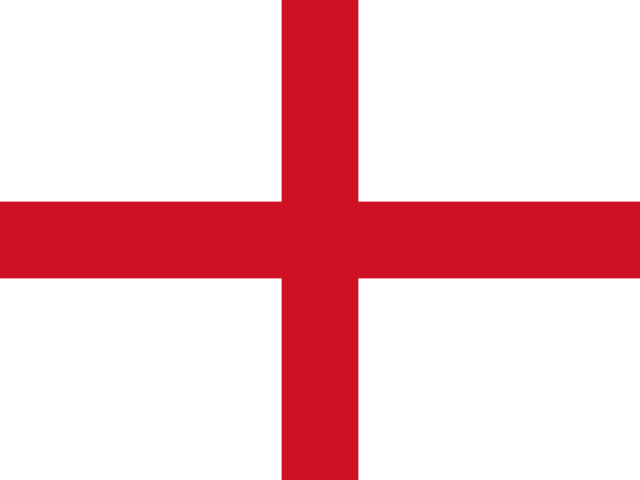
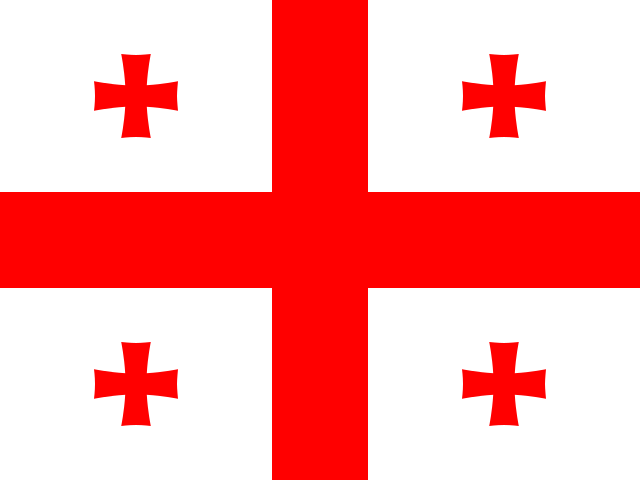
| Similar Flags | Dominican Republic, England, Georgia |
| Unique Feature | Square red field with a white Greek cross |
Other centred cross flags
See all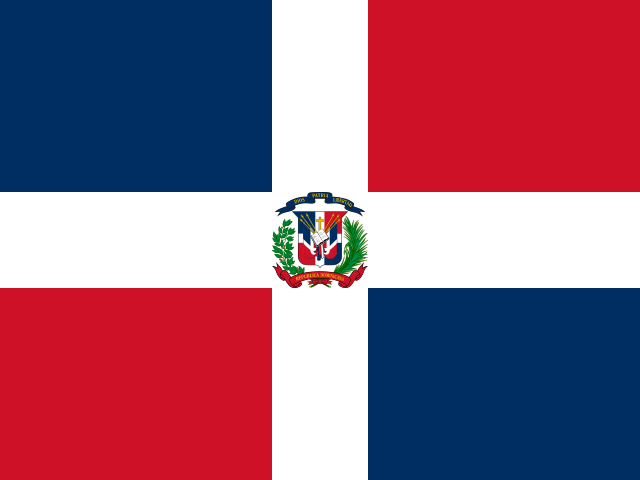
Facts about the Flag of Switzerland
- One of only two square national flags. The square shape survives from the flag's origin as a field sign carried by soldiers rather than flown from a pole.
- Switzerland's ensign at sea is rectangular, because maritime practice expects a rectangle.
- The Red Cross emblem is this flag with the colours reversed, adopted in 1863 in honour of the country where the movement was founded.
- The exact geometry of the cross — arms one sixth longer than they are wide — was only fixed in law in 2017, despite centuries of use.
- The flag of Switzerland was officially adopted on December 12, 1889.
- The design is older than its adoption. It was already in use in 1339, 550 years before it was formally made the flag of Switzerland.
- The flag in its present form is 137 years old as of 2026.
- Design type: Square red field with a white Greek cross.
- The flag is known as Schweizerfahne, a name used far more often than the formal "flag of Switzerland".
- The official proportions are 1:1. It shares that ratio with 1 national flag.
- The flag uses 2 colours: red and white.
- The red on the flag stands for the field.
- The white on the flag stands for the cross.
- White cross: Christianity and the Swiss Confederation, used since the Battle of Laupen in 1339.
- Square shape: One of only two square national flags in the world, alongside Vatican City.
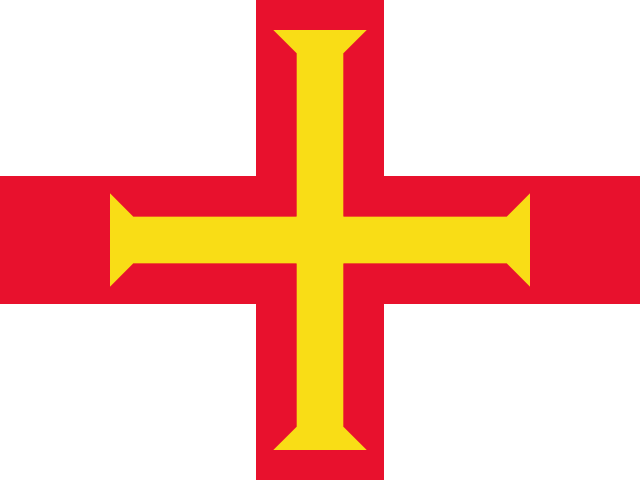
- The design belongs to the "Centred cross" family, shared with 4 other flags in this reference.
- Flags most often confused with it: Dominican Republic, England and Georgia.
- Switzerland dates its foundation to the Federal Charter of 1 August 1291 and its independence was recognised by the Peace of Westphalia in 1648.
Frequently Asked Questions about the Flag of Switzerland
When was the flag of Switzerland adopted?
The flag of Switzerland was officially adopted on December 12, 1889, though the design had already been in use since 1339.
What do the colours of the flag of Switzerland mean?
Red for the field and white for the cross.
When did Switzerland gain independence?
Switzerland dates its foundation to the Federal Charter of 1 August 1291 and its independence was recognised by the Peace of Westphalia in 1648.
What is the national sport of Switzerland?
Schwingen, Swiss wrestling, is the national sport, alongside Hornussen and stone-putting; football and skiing are the most popular.
What do the symbols on the flag of Switzerland represent?
White cross — Christianity and the Swiss Confederation, used since the Battle of Laupen in 1339. Square shape — One of only two square national flags in the world, alongside Vatican City.
What are the proportions of the flag of Switzerland?
The official ratio is 1:1, which makes the flag square. It shares those proportions with 1 national flag.
What is the national anthem of Switzerland?
The national anthem is "Swiss Psalm".
When is the national day of Switzerland?
It falls on 1 August, Swiss National Day, and the flag is flown across the country.
What is the national animal of Switzerland?
The national animal is the Alpine ibex.
What is the capital of Switzerland?
The capital is Bern. The currency is the Swiss franc (CHF) and the language spoken is French, Italian, Romansh, Swiss German.