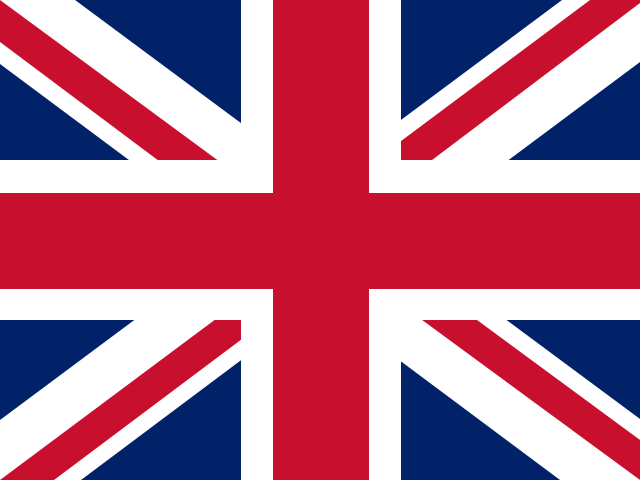
Flag of United Kingdom
CountryFlag of United Kingdom uses superimposed crosses of Saint George, Saint Andrew and Saint Patrick. Ratio 1:2 and current adoption January 1, 1801.
Flag Reference
| Flag | Flag of United Kingdom |
|---|---|
| Entity Type | Country |
| Official Name | United Kingdom of Great Britain and Northern Ireland |
| Identifier | GB / GBR |
| Region | Northern Europe |
Flag Specifications
| Current Adoption | January 1, 1801 |
|---|---|
| First Documented Use | 1606 |
| Proportion | 1:2 |
| Shape | Rectangle |
| Colours | Blue, White, Red |
| Construction | Superimposed crosses of Saint George, Saint Andrew and Saint Patrick |
| Common Name | The Union Jack |
Documented Colour Values
| Colour | Appearance | HEX | RGB | CMYK |
|---|---|---|---|---|
| Blue | #012169 | 1, 33, 105 | 99, 69, 0, 59 | |
| White | #FFFFFF | 255, 255, 255 | 0, 0, 0, 0 | |
| Red | #C8102E | 200, 16, 46 | 0, 92, 77, 22 |
Design and Symbolism
| Blue | the field of the Saltire of Saint Andrew. |
|---|---|
| White | the Saltire and the fimbriations. |
| Red | the Cross of Saint George and the Saltire of Saint Patrick. |
| Union Jack | The crosses of the patron saints of England, Scotland and Ireland combined. |
| Counterchanged saltires | The red saltire is offset against the white so that neither takes precedence — which is why the flag is not symmetrical and can be flown upside down. |
Proportions
| Ratio | 1:2 |
|---|---|
| Hoist | 1 units |
| Fly | 2 units |
Verification sources
- Flags of the World — United Kingdom — Specialist vexillological reference
Other combined cross and saltire flags
See all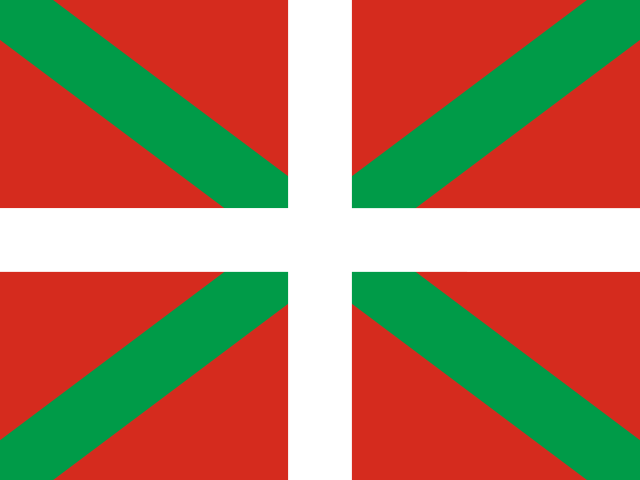
Facts about the Flag of United Kingdom
- United Kingdom is recorded as superimposed crosses of Saint George, Saint Andrew and Saint Patrick.
- The reference proportion for the flag of United Kingdom is 1:2.
- The stored palette for United Kingdom contains Blue, White and Red.
- The adoption field for this country flag record is January 1, 1801.
- The design record traces first use to 1606.
- Its construction is grouped with the combined cross and saltire design family in this library.
- Union Jack: The crosses of the patron saints of England, Scotland and Ireland combined.
- Counterchanged saltires: The red saltire is offset against the white so that neither takes precedence — which is why the flag is not symmetrical and can be flown upside down.
- The Union Flag layers three flags: the English cross of Saint George, the Scottish saltire of Saint Andrew and the Irish saltire of Saint Patrick.
- The Irish saltire is offset from the Scottish one, which means the flag is not symmetrical and can be flown upside down. The broad white band should be uppermost at the hoist.
Frequently Asked Questions about the Flag of United Kingdom
What does the flag of United Kingdom look like?
Superimposed crosses of Saint George, Saint Andrew and Saint Patrick, with a recorded proportion of 1:2.
What proportion is recorded for the flag of United Kingdom?
The reference proportion stored for this flag is 1:2.
Which colours are recorded for the flag of United Kingdom?
The reference palette lists Blue #012169, White #FFFFFF and Red #C8102E.
What do the symbols on the flag of United Kingdom represent?
Union Jack — The crosses of the patron saints of England, Scotland and Ireland combined. Counterchanged saltires — The red saltire is offset against the white so that neither takes precedence — which is why the flag is not symmetrical and can be flown upside down.
When was the present flag record for United Kingdom adopted?
The adoption field in this record is January 1, 1801.
Which design family does the flag of United Kingdom belong to?
WorldFlags.online groups it with combined cross and saltire designs for visual browsing; that classification describes construction, not necessarily historical ancestry.
Where can I verify information about the flag of United Kingdom?
The verification-source section on this page links to an official, governmental or specialist reference used to check the underlying record. Source wording is not copied into the article.