Peace Flag (PACE)
Signal, Sport and Symbolic FlagsFirst carried on a 1961 peace march from Perugia to Assisi, and now used by peace movements worldwide.
Basic Flag Information
| Flag Name | Peace Flag (PACE) |
|---|---|
| Category | Signal, Sport and Symbolic Flags |
| Adopted On | 1961 |
| Designer | Aldo Capitini |
| Flag Proportion | 2:3 |
| Flag Shape | Rectangle |
| Number of Colors | 7 |
| Main Colors | Violet, Blue, Green, Yellow, Orange, Red, White |
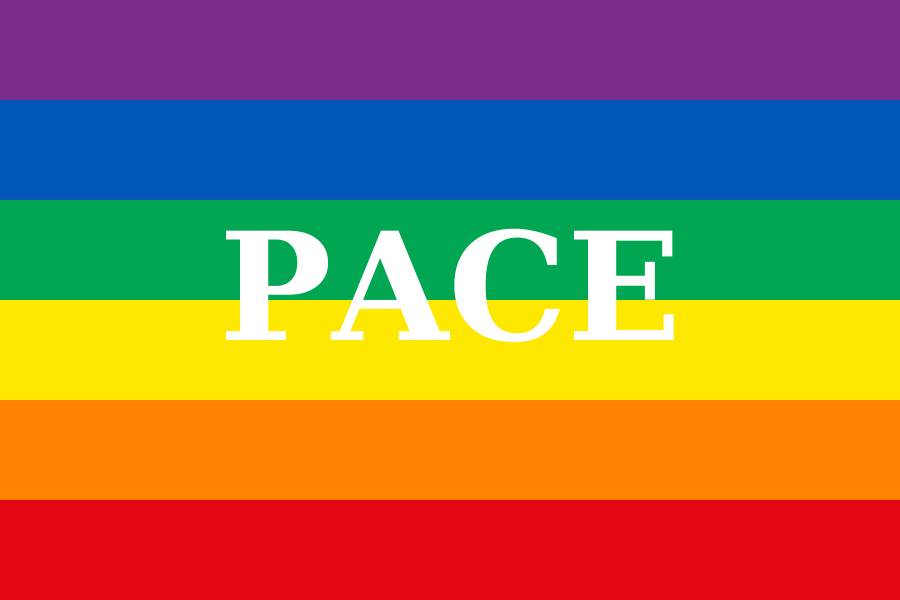
| Design Type | Six rainbow stripes with the word PACE |
Flag Color Information
| Color | Appearance | HEX Code |
|---|---|---|
| Violet | #7B2D8E | |
| Blue | #0057B8 | |
| Green | #00A651 | |
| Yellow | #FFE800 | |
| Orange | #FF8200 | |
| Red | #E30613 | |
| White | #FFFFFF |
Flag Design and Symbols
| Violet colour | Represents the top band |
|---|---|
| Blue colour | Represents one of the six bands |
| Green colour | Represents one of the six bands |
| Yellow colour | Represents one of the six bands |
| Orange colour | Represents one of the six bands |
| Red colour | Represents the bottom band |
| White colour | Represents the lettering |
| PACE | Italian for peace |
| Stripe order | Deliberately the reverse of the pride rainbow, with violet at the top |
Facts about the Flag of Peace Flag (PACE)
- The rainbow peace flag carrying the word PACE was popularised by Italian peace marches from 1961 and again on a very large scale in 2002.
- Its stripe order runs the opposite way to the pride flag, with purple at the top rather than red.
- First carried on a 1961 peace march from Perugia to Assisi, and now used by peace movements worldwide.
- The flag belongs to the peace movement. It is used worldwide, most used in Italy.
- It was founded in 1961 by Aldo Capitini, for the first Perugia to Assisi peace march.
- The flag was adopted in 1961. It was designed by Aldo Capitini.
- The design is 65 years old as of 2026.
- Construction: Six rainbow stripes with the word PACE.
- It is normally drawn to a ratio of 2:3, which makes it rectangular.
- The flag uses 7 colours: violet, blue, green, yellow, orange, red and white.
- The violet stands for the top band.
- The blue stands for one of the six bands.
- The green stands for one of the six bands.
- The yellow stands for one of the six bands.
- PACE: Italian for peace.
- Stripe order: Deliberately the reverse of the pride rainbow, with violet at the top.
- The word PACE means peace in Italian; the rainbow order is the reverse of the pride flag.
- It is filed here under Signal, Sport and Symbolic Flags, one of the categories of flag that belong to no country.
Frequently asked questions about the Peace Flag (PACE)
What is the Peace Flag (PACE)?
First carried on a 1961 peace march from Perugia to Assisi, and now used by peace movements worldwide.
Whose flag is the Peace Flag (PACE)?
It is the flag of the peace movement, used worldwide, most used in Italy.
When was the peace movement founded?
The peace movement was founded in 1961 by Aldo Capitini, for the first Perugia to Assisi peace march.
When was the Peace Flag (PACE) adopted?
The Peace Flag (PACE) was adopted in 1961 and was designed by Aldo Capitini.
What do the colours of the Peace Flag (PACE) mean?
Violet for the top band, blue for one of the six bands, green for one of the six bands, yellow for one of the six bands, orange for one of the six bands, red for the bottom band and white for the lettering.
What do the symbols on the Peace Flag (PACE) mean?
PACE — Italian for peace. Stripe order — Deliberately the reverse of the pride rainbow, with violet at the top.
What are the proportions of the Peace Flag (PACE)?
It is normally drawn to a ratio of 2:3, which makes it rectangular.
What else is worth knowing about the Peace Flag (PACE)?
The word PACE means peace in Italian; the rainbow order is the reverse of the pride flag.
Is the Peace Flag (PACE) a national flag?
No. It is not the flag of any sovereign state and is listed here under Signal, Sport and Symbolic Flags.
How many colours are on the Peace Flag (PACE)?
It uses 7 colours: violet, blue, green, yellow, orange, red and white.