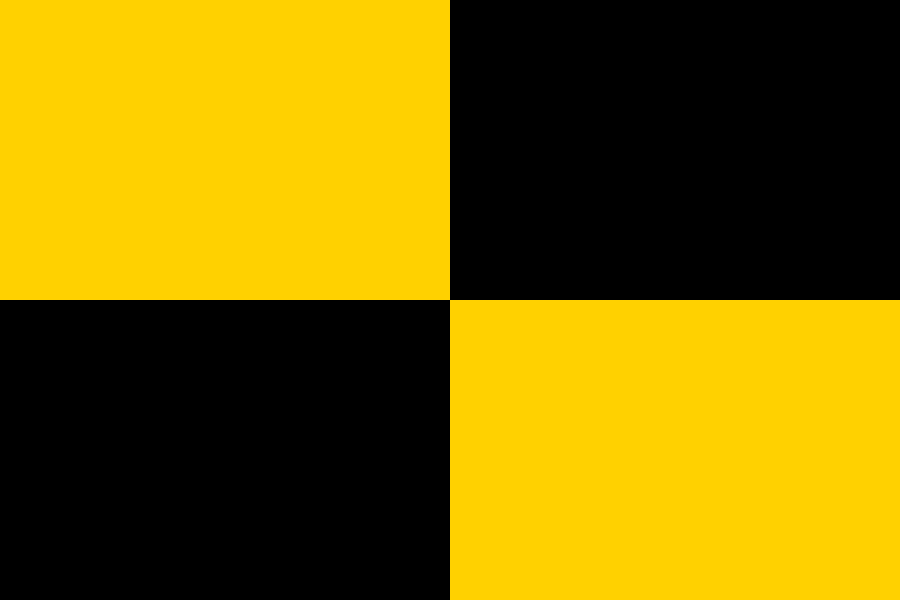
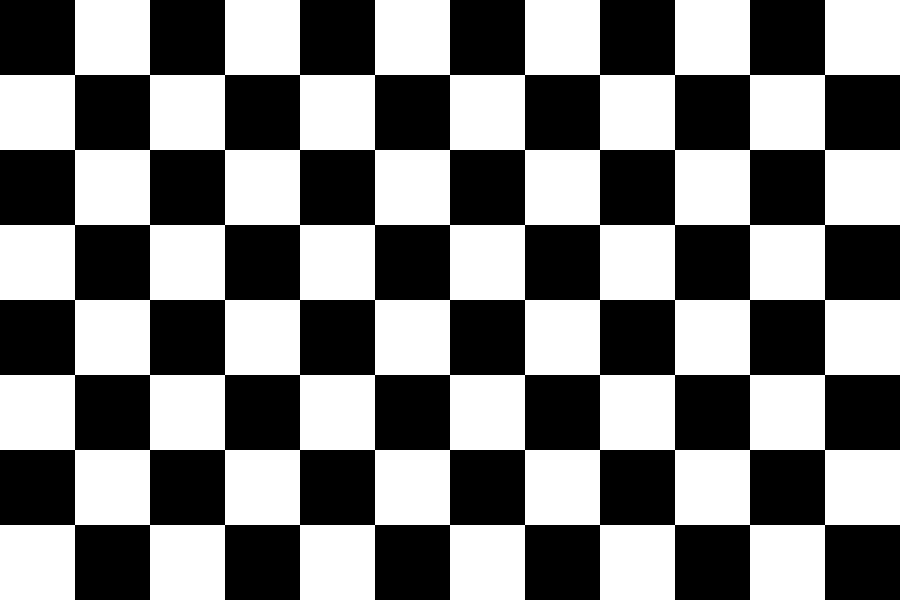
Chequered Racing Flag
Signal, Sport and Symbolic FlagsIn use in motorsport since at least 1906, and now the universal signal that a race has finished.
Basic Flag Information
| Flag Name | Chequered Racing Flag |
|---|---|
| Category | Signal, Sport and Symbolic Flags |
| Adopted On | 1906 |
| Flag Proportion | 2:3 |
| Flag Shape | Rectangle |
| Number of Colors | 2 |
| Main Colors | Black, White |
| Design Type | Black and white chequerboard |
Flag Color Information
| Color | Appearance | HEX Code |
|---|---|---|
| Black | #000000 | |
| White | #FFFFFF |
Flag Design and Symbols
| Black colour | Represents the dark squares |
|---|---|
| White colour | Represents the light squares |
| Chequered pattern | Waved to signal the end of a motor race — its high contrast makes it readable at speed and at distance |
Facts about the Flag of Chequered Racing Flag
- The origin of the black-and-white chequer in motorsport is genuinely unknown. Several competing accounts circulate, none of them well evidenced.
- It is one of the most widely recognised flags in the world despite belonging to no country or organisation.
- In use in motorsport since at least 1906, and now the universal signal that a race has finished.
- The flag belongs to motorsport. It is used worldwide.
- It was founded in the early twentieth century.
- It is waved at the finish line to signal that the race is over.
- The flag was adopted in 1906.
- The design is 120 years old as of 2026.
- Construction: Black and white chequerboard.
- It is normally drawn to a ratio of 2:3, which makes it rectangular.
- The flag uses 2 colours: black and white.
- The black stands for the dark squares.
- The white stands for the light squares.
- Chequered pattern: Waved to signal the end of a motor race — its high contrast makes it readable at speed and at distance.
- The earliest photographic evidence is from a 1906 Vanderbilt Cup race; the origin of the pattern itself is not documented.
- It is filed here under Signal, Sport and Symbolic Flags, one of the categories of flag that belong to no country.
Frequently asked questions about the Chequered Racing Flag
What is the Chequered Racing Flag?
In use in motorsport since at least 1906, and now the universal signal that a race has finished.
Whose flag is the Chequered Racing Flag?
It is the flag of motorsport, used worldwide.
When was motorsport founded?
Motorsport was founded in the early twentieth century.
When was the Chequered Racing Flag adopted?
The Chequered Racing Flag was adopted in 1906.
What do the colours of the Chequered Racing Flag mean?
Black for the dark squares and white for the light squares.
What do the symbols on the Chequered Racing Flag mean?
Chequered pattern — Waved to signal the end of a motor race — its high contrast makes it readable at speed and at distance.
Where is the Chequered Racing Flag flown?
It is waved at the finish line to signal that the race is over.
What are the proportions of the Chequered Racing Flag?
It is normally drawn to a ratio of 2:3, which makes it rectangular.
What else is worth knowing about the Chequered Racing Flag?
The earliest photographic evidence is from a 1906 Vanderbilt Cup race; the origin of the pattern itself is not documented.
Is the Chequered Racing Flag a national flag?
No. It is not the flag of any sovereign state and is listed here under Signal, Sport and Symbolic Flags.