Buddhist Flag
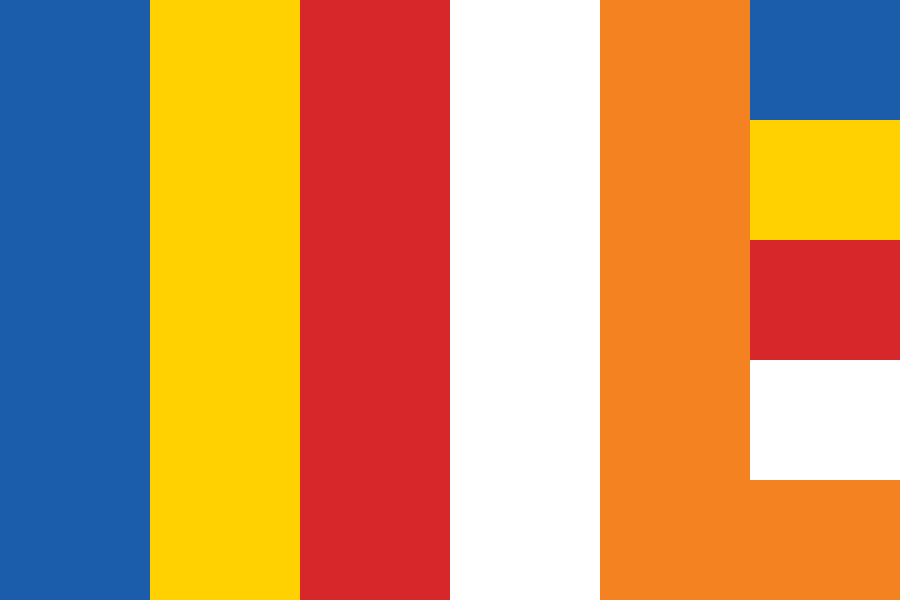
Religious FlagsDesigned in Sri Lanka in 1885 and adopted as the international Buddhist flag in 1950.
Basic Flag Information
| Flag Name | Buddhist Flag |
|---|---|
| Category | Religious Flags |
| Adopted On | 1885 |
| Designer | J. R. de Silva and Henry Steel Olcott |
| Flag Proportion | 2:3 |
| Flag Shape | Rectangle |
| Number of Colors | 5 |
| Main Colors | Blue, Yellow, Red, White, Orange |
| Design Type | Five vertical bands with a sixth compound band at the fly |
Flag Color Information
| Color | Appearance | HEX Code |
|---|---|---|
| Blue | #1B5DAB | |
| Yellow | #FFD100 | |
| Red | #D8272B | |
| White | #FFFFFF | |
| Orange | #F58220 |
Flag Design and Symbols
| Blue colour | Represents loving kindness and peace |
|---|---|
| Yellow colour | Represents the Middle Path |
| Red colour | Represents blessings, achievement and dignity |
| White colour | Represents purity and liberation |
| Orange colour | Represents wisdom |
| Six colours | The aura said to have surrounded the Buddha at his enlightenment; the sixth band at the fly combines the other five |
Facts about the Flag of Buddhist Flag
- The five vertical bands represent the colours of the aura said to have surrounded the Buddha, with a sixth band combining all five.
- It was designed in Sri Lanka in 1885 and adopted as an international Buddhist flag in 1950.
- Designed in Sri Lanka in 1885 and adopted as the international Buddhist flag in 1950.
- The flag belongs to Buddhism. It is used worldwide.
- It was founded in 1885, in Colombo by J. R. de Silva and Henry Steel Olcott.
- It is flown at temples and on Vesak.
- The flag was adopted in 1885. It was designed by J. R. de Silva and Henry Steel Olcott.
- The design is 141 years old as of 2026.
- Construction: Five vertical bands with a sixth compound band at the fly.
- It is normally drawn to a ratio of 2:3, which makes it rectangular.
- The flag uses 5 colours: blue, yellow, red, white and orange.
- The blue stands for loving kindness and peace.
- The yellow stands for the Middle Path.
- The red stands for blessings, achievement and dignity.
- The white stands for purity and liberation.
- Six colours: The aura said to have surrounded the Buddha at his enlightenment; the sixth band at the fly combines the other five.
- It was adopted as the international Buddhist flag by the World Fellowship of Buddhists in 1952; the five colours are those said to have shone from the Buddha at his enlightenment.
- It is filed here under Religious Flags, one of the categories of flag that belong to no country.
Frequently asked questions about the Buddhist Flag
What is the Buddhist Flag?
Designed in Sri Lanka in 1885 and adopted as the international Buddhist flag in 1950.
Whose flag is the Buddhist Flag?
It is the flag of Buddhism, used worldwide.
When was Buddhism founded?
Buddhism was founded in 1885, in Colombo by J. R. de Silva and Henry Steel Olcott.
When was the Buddhist Flag adopted?
The Buddhist Flag was adopted in 1885 and was designed by J. R. de Silva and Henry Steel Olcott.
What do the colours of the Buddhist Flag mean?
Blue for loving kindness and peace, yellow for the Middle Path, red for blessings, achievement and dignity, white for purity and liberation and orange for wisdom.
What do the symbols on the Buddhist Flag mean?
Six colours — The aura said to have surrounded the Buddha at his enlightenment; the sixth band at the fly combines the other five.
Where is the Buddhist Flag flown?
It is flown at temples and on Vesak.
What are the proportions of the Buddhist Flag?
It is normally drawn to a ratio of 2:3, which makes it rectangular.
What else is worth knowing about the Buddhist Flag?
It was adopted as the international Buddhist flag by the World Fellowship of Buddhists in 1952; the five colours are those said to have shone from the Buddha at his enlightenment.
Is the Buddhist Flag a national flag?
No. It is not the flag of any sovereign state and is listed here under Religious Flags.