Flag of Virgin Islands (British)
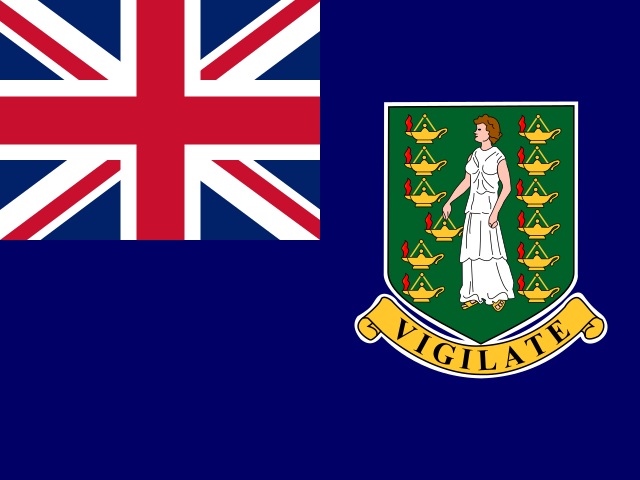
territoryThe flag of Virgin Islands (British) was adopted on November 15, 1960. British Blue Ensign with the Virgin Islands coat of arms. It uses 4 colours: blue, white, red and gold. The official proportions are 1:2.
Basic Flag Information
| Flag Name | Flag of Virgin Islands (British) |
|---|---|
| Country | Virgin Islands (British) |
| Official Country Name | Virgin Islands |
| Capital | Road Town |
| Continent | Americas |
| Region | Caribbean |
| ISO Country Code | VG / VGB |
| Internet Domain | .vg |
| Calling Code | +1284 |
| Currency | United States dollar (USD) |
| National Language(s) | English |
| Demonym | Virgin Islander |
| Area | 151 km² |
Flag Specifications
| Official Flag Name | Flag of Virgin Islands (British) |
|---|---|
| Adopted On | November 15, 1960 |
| First Used | 1960 |
| Current Version Adopted | November 15, 1960 |
| Flag Proportion | 1:2 |
| Flag Shape | Rectangle |
| Number of Colors | 4 |
| Main Colors | Blue, White, Red, Gold |
| Design Type | British Blue Ensign with the Virgin Islands coat of arms |
| Official Status | Official Territorial Flag |
Flag Color Information
| Color | Appearance | HEX Code | RGB | CMYK |
|---|---|---|---|---|
| Blue | #012169 | 1, 33, 105 | 99, 69, 0, 59 | |
| White | #FFFFFF | 255, 255, 255 | 0, 0, 0, 0 | |
| Red | #C8102E | 200, 16, 46 | 0, 92, 77, 22 | |
| Gold | #FFC72C | 255, 199, 44 | 0, 22, 83, 0 |
Flag Design and Symbols
| Blue colour | Represents the ensign field |
|---|---|
| White colour | Represents the Union Jack and the arms |
| Red colour | Represents the Union Jack |
| Gold colour | Represents the lamps |
| Saint Ursula and eleven lamps | The legend of Saint Ursula and her eleven thousand virgin companions, which gave the islands their name |
| Motto | “Vigilate” — Be watchful |
Flag History
| Year / Period | Event |
|---|---|
| 1960 | The design was first used |
| 1960-11-15 | The current flag was officially adopted |
| Present | The flag remains in official use |
| Present | The flag remains in official use |
Flag Dimensions and Construction
| Official Ratio | 1:2 |
|---|---|
| Width | 1 units (hoist) |
| Length | 2 units (fly) |
Virgin Islands (British) Flag Usage
| Government Buildings | Yes |
|---|---|
| Schools | Yes |
| Civil Use | Yes |
| Official Ceremonies | Yes |
| Sports Events | Yes |
Other Official Flags of Virgin Islands (British)
| Flag Type | Use | Link |
|---|---|---|
| National Flag | National representation | View flag |
| Civil Flag | Used by civilians | View flag |
| State Flag | Used by government | View flag |
| War Flag | Used during military operations | View flag |
| Naval Ensign | Used by the navy | View flag |
| Air Force Flag | Used by the air force | View flag |
| Presidential Standard | Used by the head of state | View flag |
| Royal Standard | Used by the monarch | View flag |
| Historical Flag | Previous national flag | View flag |
Quick Facts About the Flag
| Flag Age | 66 years old as of 2026 |
|---|---|
| Adoption Date | November 15, 1960 |
| Oldest Version | 1960 |
| Most Common Color | Blue |
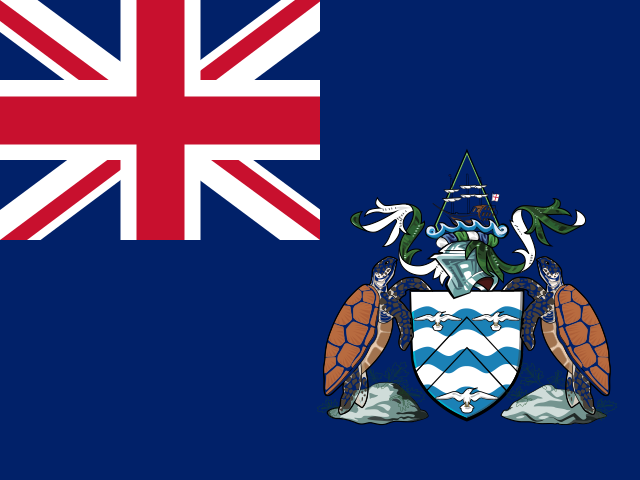
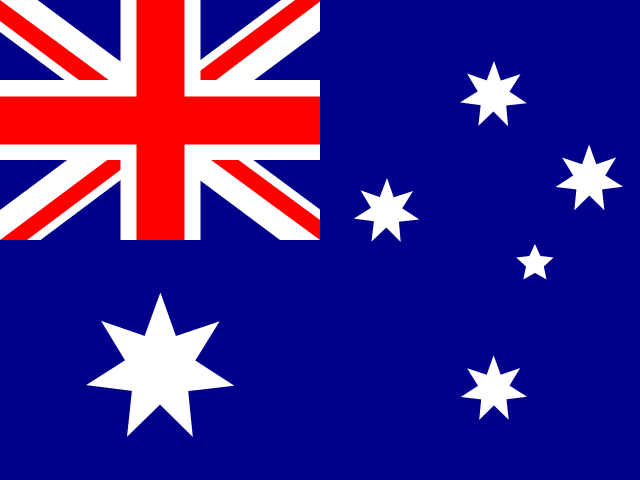
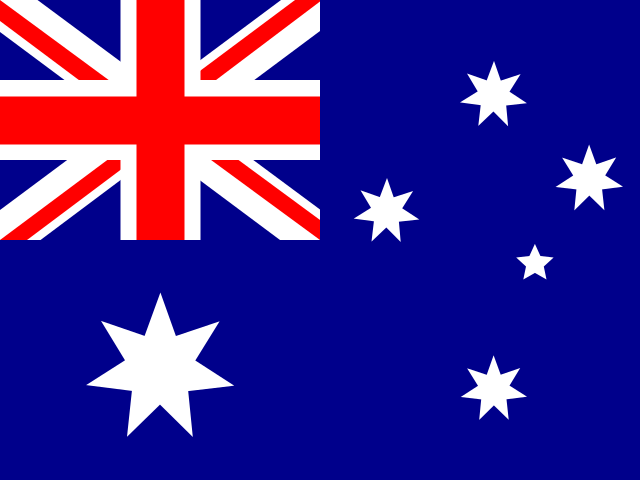
| Similar Flags | Anguilla, Ascension Island, Australia |
| Unique Feature | British Blue Ensign with the Virgin Islands coat of arms |
Other british-style ensign flags
See all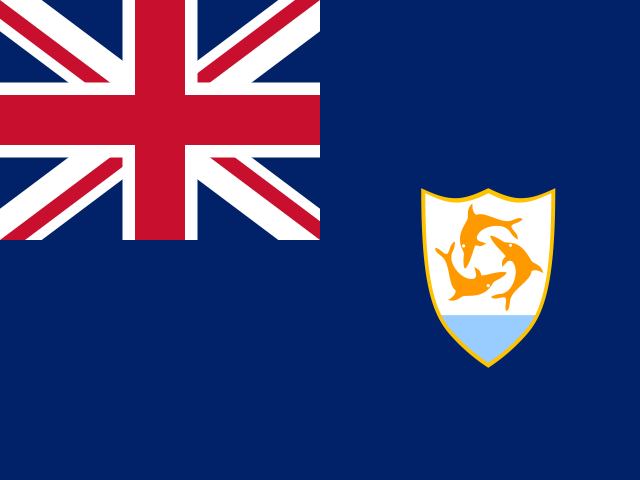
Facts about the Flag of Virgin Islands (British)
- The eleven lamps around Saint Ursula in the arms refer to the legend of her eleven thousand virgin companions, which is where the Virgin Islands got their name.
- The motto Vigilate — be watchful — sits beneath the shield.
- The flag of Virgin Islands (British) was officially adopted on November 15, 1960.
- The flag in its present form is 66 years old as of 2026.
- Design type: British Blue Ensign with the Virgin Islands coat of arms.
- The official proportions are 1:2. It shares that ratio with 55 national flags.
- The flag uses 4 colours: blue, white, red and gold.
- The blue on the flag stands for the ensign field.
- The white on the flag stands for the Union Jack and the arms.
- The red on the flag stands for the Union Jack.
- Saint Ursula and eleven lamps: The legend of Saint Ursula and her eleven thousand virgin companions, which gave the islands their name.
- Motto: “Vigilate” — Be watchful.
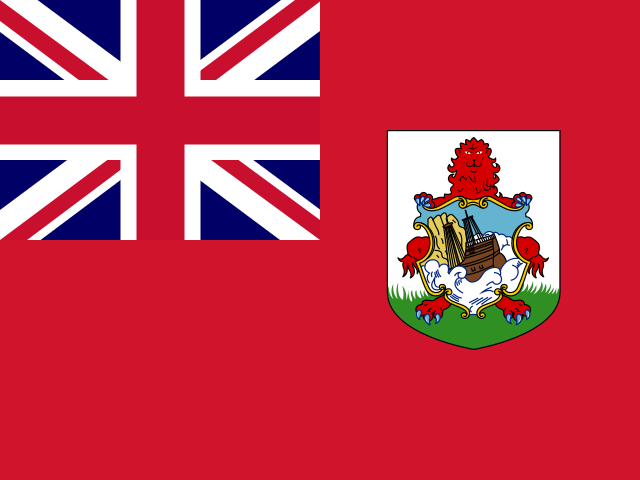
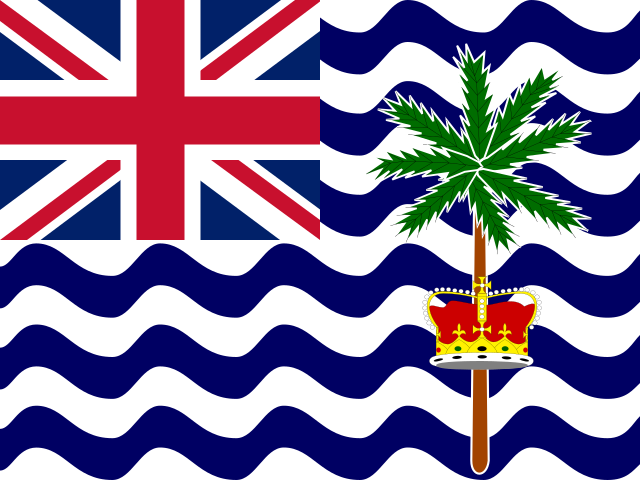
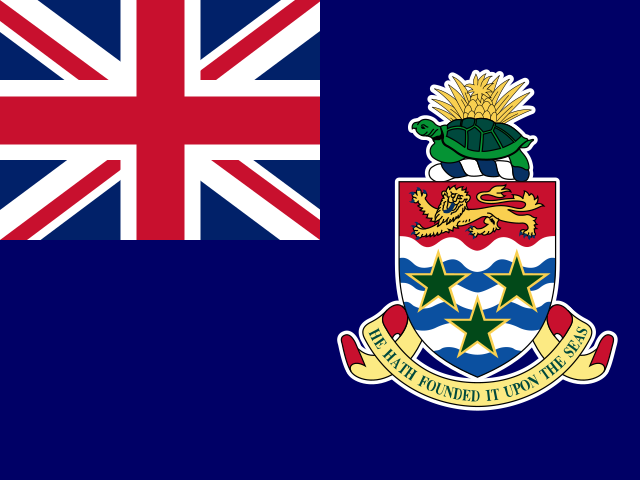
- The design belongs to the "British-style ensign" family, shared with 22 other flags in this reference.
- Flags most often confused with it: Anguilla, Ascension Island and Australia.
- Virgin Islands (British) is a British Overseas Territory, administered by the United Kingdom.
- Sailing is the sport the islands are best known for.
- The flag is flown everywhere on 1 July, Territory Day.
- The capital is Road Town. The currency is the United States dollar (USD).
Frequently Asked Questions about the Flag of Virgin Islands (British)
When was the flag of Virgin Islands (British) adopted?
The flag of Virgin Islands (British) was officially adopted on November 15, 1960.
What do the colours of the flag of Virgin Islands (British) mean?
Blue for the ensign field, white for the Union Jack and the arms, red for the Union Jack and gold for the lamps.
Is Virgin Islands (British) an independent country?
Virgin Islands (British) is a British Overseas Territory, administered by the United Kingdom.
What is the national sport of Virgin Islands (British)?
Sailing is the sport the islands are best known for.
What do the symbols on the flag of Virgin Islands (British) represent?
Saint Ursula and eleven lamps — The legend of Saint Ursula and her eleven thousand virgin companions, which gave the islands their name. Motto — “Vigilate” — Be watchful.
What are the proportions of the flag of Virgin Islands (British)?
The official ratio is 1:2, which makes the flag rectangular. It shares those proportions with 55 national flags.
When is the national day of Virgin Islands (British)?
It falls on 1 July, Territory Day, and the flag is flown across the country.
What is the capital of Virgin Islands (British)?
The capital is Road Town. The currency is the United States dollar (USD) and the language spoken is English.
Which flags look similar to the flag of Virgin Islands (British)?
The closest matches are Anguilla, Ascension Island and Australia, which share both the construction and most of the colours.
How many colours are on the flag of Virgin Islands (British)?
It uses 4 colours: blue, white, red and gold.