
Flag of Australia
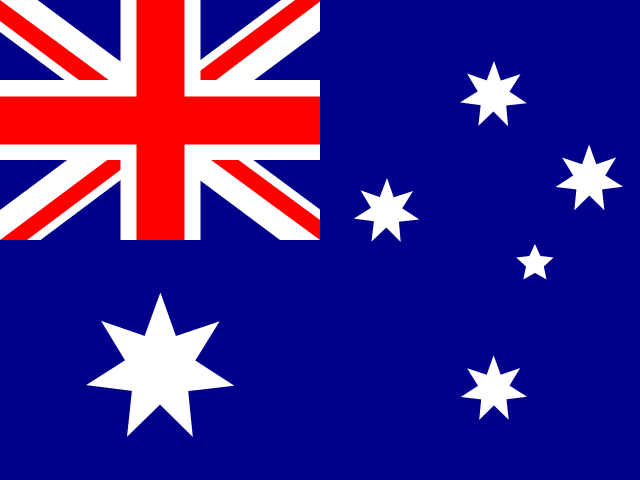
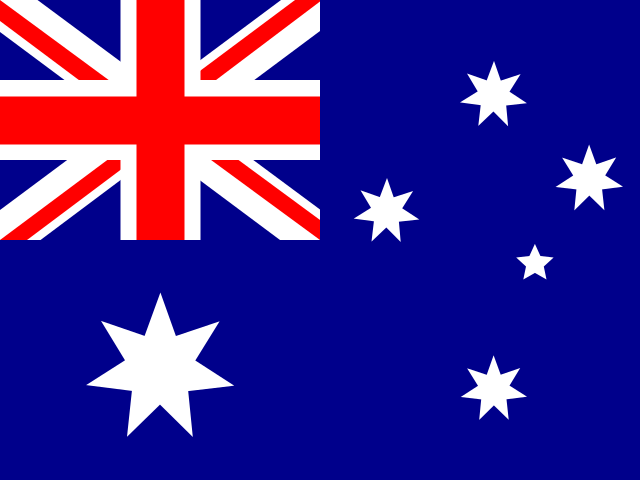
countryThe flag of Australia was adopted on April 14, 1954. Blue Ensign with the Commonwealth Star and Southern Cross. It uses 3 colours: blue, white and red. The official proportions are 1:2.
Basic Flag Information
| Flag Name | Flag of Australia |
|---|---|
| Country | Australia |
| Official Country Name | Commonwealth of Australia |
| Capital | Canberra |
| Continent | Oceania |
| Region | Australia and New Zealand |
| ISO Country Code | AU / AUS |
| Internet Domain | .au |
| Calling Code | +61 |
| Currency | Australian dollar (AUD) |
| National Language(s) | English |
| Demonym | Australian |
| Area | 7,692,024 km² |
| Population | 27 million (2025 est.) |
Flag Specifications
| Official Flag Name | Flag of Australia |
|---|---|
| Adopted On | April 14, 1954 |
| First Used | September 3, 1901 |
| Current Version Adopted | April 14, 1954 |
| Flag Proportion | 1:2 |
| Flag Shape | Rectangle |
| Number of Colors | 3 |
| Main Colors | Blue, White, Red |
| Design Type | Blue Ensign with the Commonwealth Star and Southern Cross |
| Official Status | Official National Flag |
| Government Authority | Government of Australia |
Flag Color Information
| Color | Appearance | HEX Code | RGB | CMYK |
|---|---|---|---|---|
| Blue | #012169 | 1, 33, 105 | 99, 69, 0, 59 | |
| White | #FFFFFF | 255, 255, 255 | 0, 0, 0, 0 | |
| Red | #E4002B | 228, 0, 43 | 0, 100, 81, 11 |
Flag Design and Symbols
| Blue colour | Represents the ensign field |
|---|---|
| White colour | Represents the stars and the Union Jack |
| Red colour | Represents the Union Jack |
| Commonwealth Star | Its seven points stand for the six states and the territories |
| Southern Cross | The constellation that identifies the southern hemisphere, in four seven-pointed stars and one five-pointed star |
Flag History
| Year / Period | Event |
|---|---|
| 1901-09-03 | The design was first used |
| 1954-04-14 | The current flag was officially adopted |
| Present | The flag remains in official use |
| Present | The flag remains in official use |
Flag Dimensions and Construction
| Official Ratio | 1:2 |
|---|---|
| Width | 1 units (hoist) |
| Length | 2 units (fly) |
Australia Flag Usage
| Government Buildings | Yes |
|---|---|
| Schools | Yes |
| Civil Use | Yes |
| Official Ceremonies | Yes |
| Sports Events | Yes |
| National Holidays | Yes |
| Military | Yes |
| Naval Use | Yes |
| Embassies | Yes |
| International Events | Yes |
Other Official Flags of Australia
| Flag Type | Use | Link |
|---|---|---|
| National Flag | National representation | View flag |
| Civil Flag | Used by civilians | View flag |
| State Flag | Used by government | View flag |
| War Flag | Used during military operations | View flag |
| Naval Ensign | Used by the navy | View flag |
| Air Force Flag | Used by the air force | View flag |
| Presidential Standard | Used by the head of state | View flag |
| Royal Standard | Used by the monarch | View flag |
| Historical Flag | Previous national flag | View flag |
Quick Facts About the Flag
| Flag Age | 72 years old as of 2026 |
|---|---|
| Adoption Date | April 14, 1954 |
| Oldest Version | September 3, 1901 |
| Flag Nickname | The Australian Blue Ensign |
| Most Common Color | Blue |
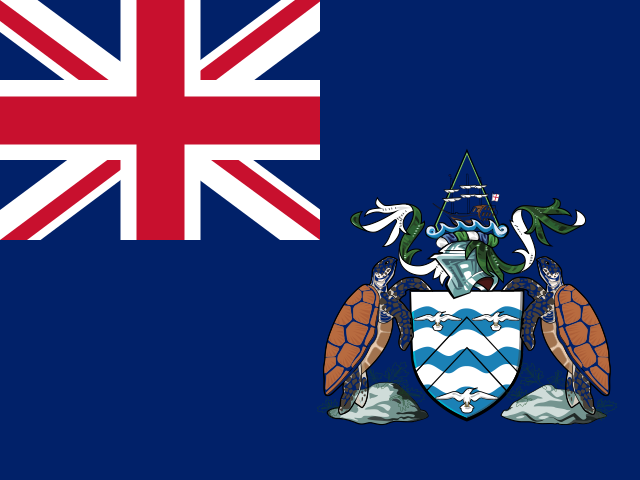
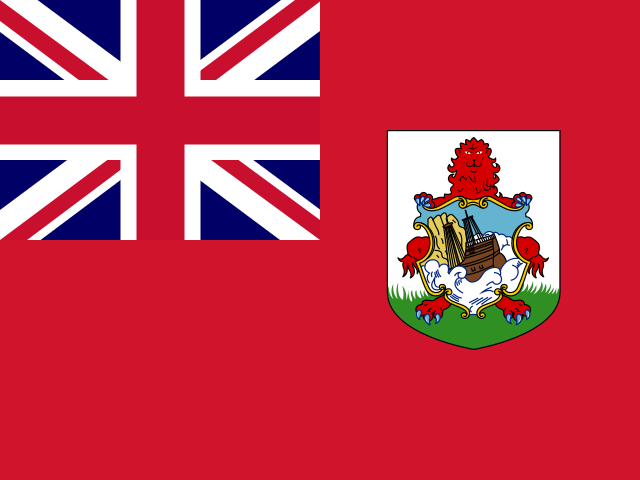
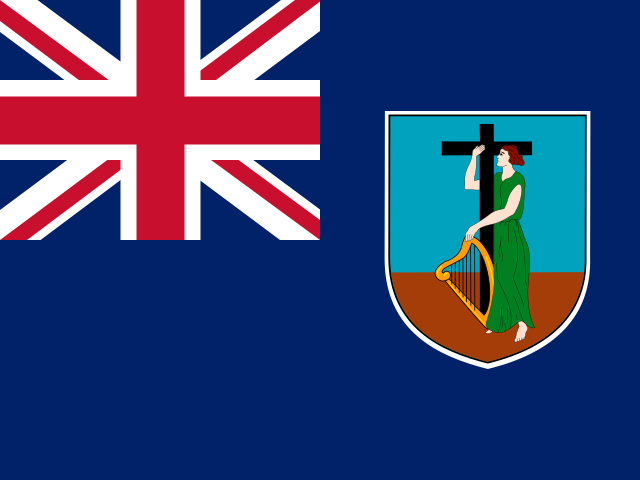
| Similar Flags | Anguilla, Ascension Island, Bermuda |
| Unique Feature | Blue Ensign with the Commonwealth Star and Southern Cross |
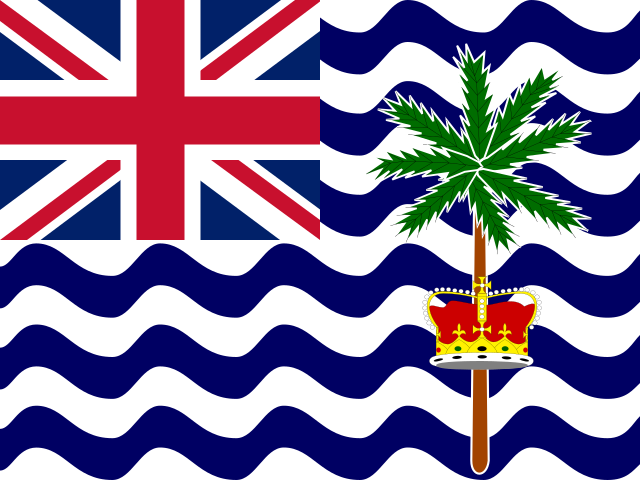
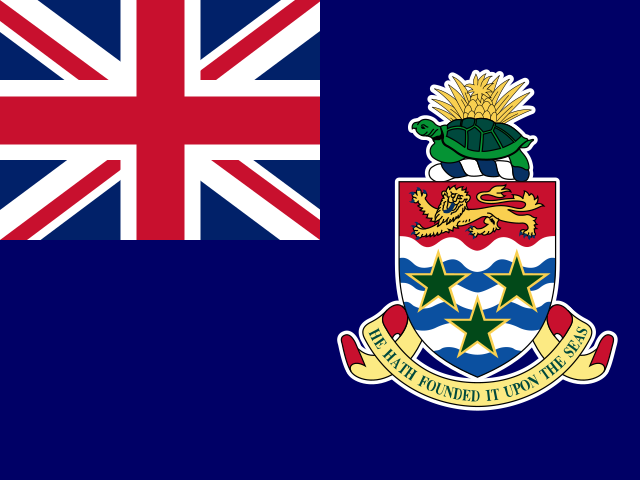
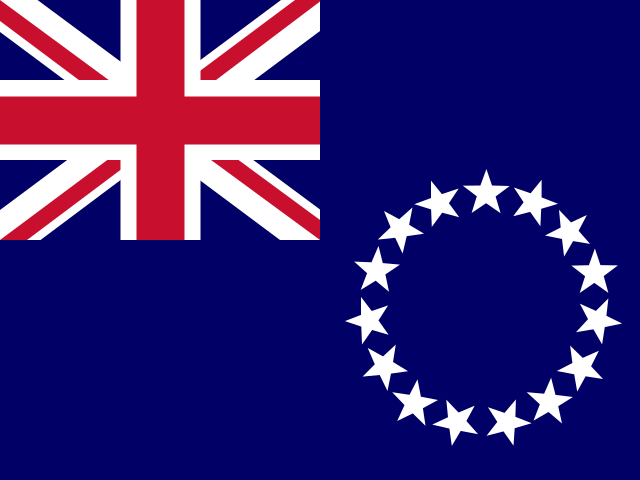
Other british-style ensign flags
See all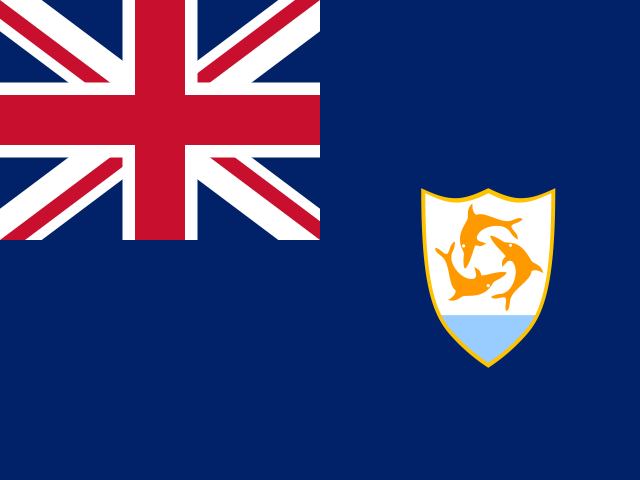
Facts about the Flag of Australia
- The 1901 design competition drew more than thirty thousand entries, and five people submitted essentially the same design; the prize money was divided between them.
- The Commonwealth Star beneath the Union Flag has seven points — six for the original states and one for the territories, a point added in 1908.
- The five stars of the Southern Cross have differing numbers of points, reflecting their relative brightness, which is a level of astronomical detail few flags attempt.
- The flag of Australia was officially adopted on April 14, 1954.
- The design is older than its adoption. It was already in use in 1901, 53 years before it was formally made the flag of Australia.
- The flag in its present form is 72 years old as of 2026.
- Design type: Blue Ensign with the Commonwealth Star and Southern Cross.
- The flag is known as The Australian Blue Ensign, a name used far more often than the formal "flag of Australia".
- The official proportions are 1:2. It shares that ratio with 54 national flags.
- The flag uses 3 colours: blue, white and red.
- The blue on the flag stands for the ensign field.
- The white on the flag stands for the stars and the Union Jack.
- The red on the flag stands for the Union Jack.
- Commonwealth Star: Its seven points stand for the six states and the territories.
- Southern Cross: The constellation that identifies the southern hemisphere, in four seven-pointed stars and one five-pointed star.
- The design belongs to the "British-style ensign" family, shared with 22 other flags in this reference.
- Flags most often confused with it: Anguilla, Ascension Island and Bermuda.
- Australia became independent on 1 January 1901 from the United Kingdom.
Frequently Asked Questions about the Flag of Australia
When was the flag of Australia adopted?
The flag of Australia was officially adopted on April 14, 1954, though the design had already been in use since 1901.
What do the colours of the flag of Australia mean?
Blue for the ensign field, white for the stars and the Union Jack and red for the Union Jack.
When did Australia gain independence?
Australia became independent on 1 January 1901 from the United Kingdom. The colonies federated in 1901; the Statute of Westminster was adopted in 1942 and the last constitutional links were severed by the Australia Act in 1986.
What is the national sport of Australia?
Cricket is the national summer sport and Australian rules football the largest winter code.
What do the symbols on the flag of Australia represent?
Commonwealth Star — Its seven points stand for the six states and the territories. Southern Cross — The constellation that identifies the southern hemisphere, in four seven-pointed stars and one five-pointed star.
What are the proportions of the flag of Australia?
The official ratio is 1:2, which makes the flag rectangular. It shares those proportions with 54 national flags.
What is the national anthem of Australia?
The national anthem is "Advance Australia Fair".
When is the national day of Australia?
It falls on 26 January, Australia Day, and the flag is flown across the country.
What is the national animal of Australia?
The national animal is the red kangaroo and emu, the two supporters of the coat of arms.
What is the capital of Australia?
The capital is Canberra. The currency is the Australian dollar (AUD) and the language spoken is English.