Wiphala
Identity and Pride FlagsThe flag of the indigenous peoples of the Andes, a co-official flag of Bolivia since 2009.
Basic Flag Information
| Flag Name | Wiphala |
|---|---|
| Category | Identity and Pride Flags |
| Adopted On | 2009 |
| Flag Proportion | 1:1 |
| Flag Shape | Square |
| Number of Colors | 7 |
| Main Colors | Red, Orange, Yellow, White, Green, Blue, Violet |
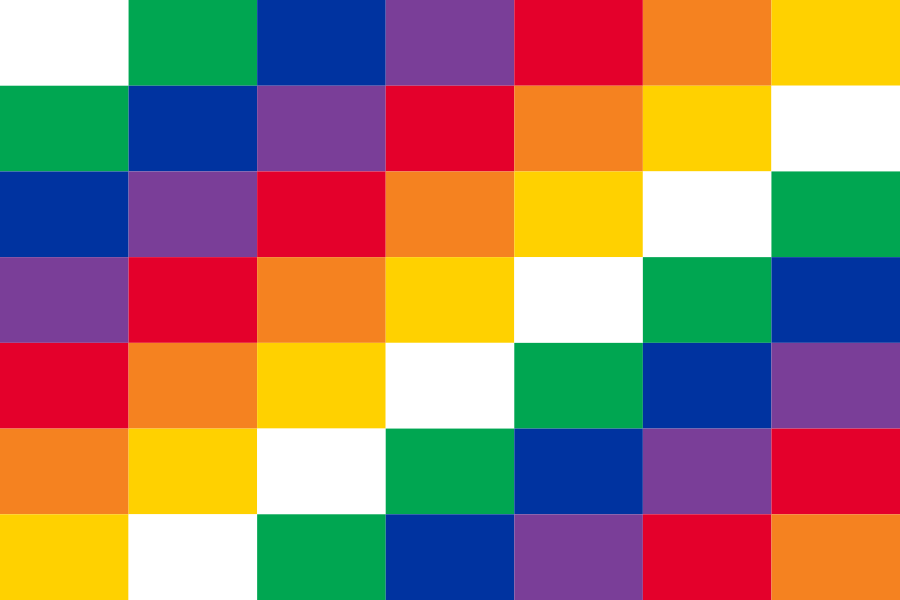
| Design Type | Seven-by-seven chequerboard of seven colours on the diagonal |
Flag Color Information
| Color | Appearance | HEX Code |
|---|---|---|
| Red | #E4002B | |
| Orange | #F58220 | |
| Yellow | #FFD100 | |
| White | #FFFFFF | |
| Green | #00A651 | |
| Blue | #0033A0 | |
| Violet | #7A3E98 |
Flag Design and Symbols
| Red colour | Represents the Andean earth |
|---|---|
| Orange colour | Represents society and culture |
| Yellow colour | Represents energy and strength |
| White colour | Represents time and change |
| Green colour | Represents the land and its natural riches |
| Blue colour | Represents the cosmos |
| Violet colour | Represents Andean government and self-determination |
| Diagonal colour bands | The forty-nine squares run in seven diagonal rainbows, standing for the Andean philosophy of balance |
Facts about the Flag of Wiphala
- The Wiphala is a square of forty-nine coloured patches arranged diagonally, and Bolivia gave it equal status with the national tricolour in the 2009 constitution.
- Different versions exist for each of the four regions of the historic Andean world, distinguished by the colour running along the diagonal.
- The flag of the indigenous peoples of the Andes, a co-official flag of Bolivia since 2009.
- The flag is used in the Andes, principally Bolivia and Peru.
- The flag was adopted in 2009.
- The design is 17 years old as of 2026.
- Construction: Seven-by-seven chequerboard of seven colours on the diagonal.
- It is normally drawn to a ratio of 1:1, which makes it square.
- The flag uses 7 colours: red, orange, yellow, white, green, blue and violet.
- The red stands for the Andean earth.
- The orange stands for society and culture.
- The yellow stands for energy and strength.
- The white stands for time and change.
- Diagonal colour bands: The forty-nine squares run in seven diagonal rainbows, standing for the Andean philosophy of balance.
- The Wiphala of Qullasuyu has been a co-official flag of Bolivia alongside the tricolour since the constitution of 2009.
- It is filed here under Identity and Pride Flags, one of the categories of flag that belong to no country.
Frequently asked questions about the Wiphala
What is the Wiphala?
The flag of the indigenous peoples of the Andes, a co-official flag of Bolivia since 2009.
When was the Wiphala adopted?
The Wiphala was adopted in 2009.
What do the colours of the Wiphala mean?
Red for the Andean earth, orange for society and culture, yellow for energy and strength, white for time and change, green for the land and its natural riches, blue for the cosmos and violet for Andean government and self-determination.
What do the symbols on the Wiphala mean?
Diagonal colour bands — The forty-nine squares run in seven diagonal rainbows, standing for the Andean philosophy of balance.
What are the proportions of the Wiphala?
It is normally drawn to a ratio of 1:1, which makes it square.
What else is worth knowing about the Wiphala?
The Wiphala of Qullasuyu has been a co-official flag of Bolivia alongside the tricolour since the constitution of 2009.
Is the Wiphala a national flag?
No. It is not the flag of any sovereign state and is listed here under Identity and Pride Flags.
How many colours are on the Wiphala?
It uses 7 colours: red, orange, yellow, white, green, blue and violet.
What are the colour codes of the Wiphala?
The HEX values are Red #E4002B, Orange #F58220, Yellow #FFD100, White #FFFFFF, Green #00A651, Blue #0033A0 and Violet #7A3E98, and the full colour table is on this page.
What does the Wiphala look like?
Seven-by-seven chequerboard of seven colours on the diagonal, normally drawn to a ratio of 1:1.