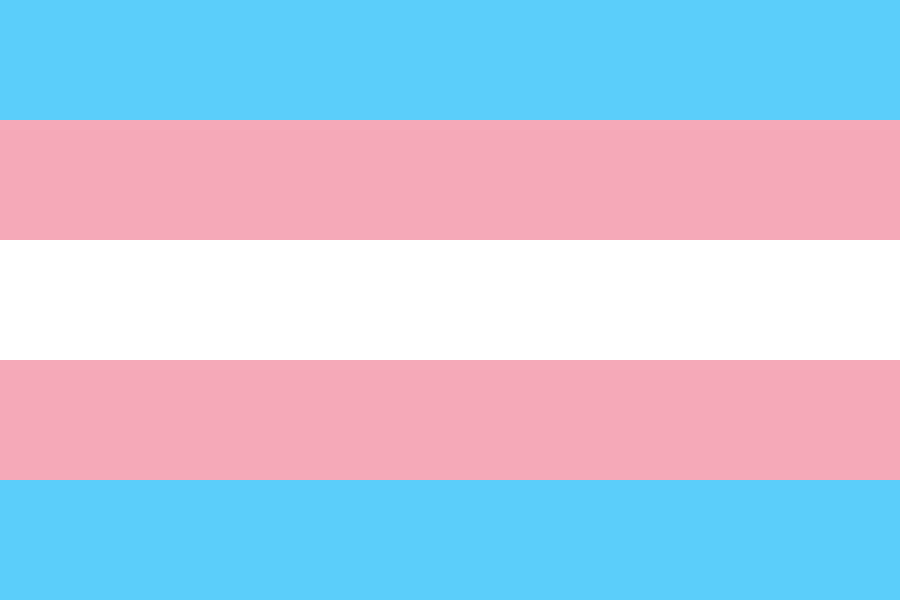
Transgender Pride Flag
Identity and Pride FlagsDesigned in 1999 by Monica Helms, a transgender American navy veteran, and first flown at a pride parade in Phoenix, Arizona in 2000.
Basic Flag Information
| Flag Name | Transgender Pride Flag |
|---|---|
| Category | Identity and Pride Flags |
| Adopted On | 1999 |
| Designer | Monica Helms |
| Flag Proportion | 3:5 |
| Flag Shape | Rectangle |
| Number of Colors | 3 |
| Main Colors | Light Blue, Pink, White |
| Design Type | Five horizontal stripes in a symmetrical arrangement |
Flag Color Information
| Color | Appearance | HEX Code |
|---|---|---|
| Light Blue | #5BCEFA | |
| Pink | #F5A9B8 | |
| White | #FFFFFF |
Flag Design and Symbols
| Light Blue colour | Represents the traditional colour for boys |
|---|---|
| Pink colour | Represents the traditional colour for girls |
| White colour | Represents people who are transitioning, intersex, or of neutral or undefined gender |
| Symmetry | The pattern is the same whichever way up the flag is flown — a deliberate statement that there is no wrong way to be transgender |
Facts about the Flag of Transgender Pride Flag
- Monica Helms designed the flag in 1999 with a deliberate property: it reads the same whichever way up it is flown, which she described as representing finding correctness in one's own life.
- The original flag was donated to the Smithsonian in 2014.
- Designed in 1999 by Monica Helms, a transgender American navy veteran, and first flown at a pride parade in Phoenix, Arizona in 2000.
- The flag is used worldwide.
- The flag was adopted in 1999. It was designed by Monica Helms.
- The design is 27 years old as of 2026.
- Construction: Five horizontal stripes in a symmetrical arrangement.
- It is normally drawn to a ratio of 3:5, which makes it rectangular.
- The flag uses 3 colours: light blue, pink and white.
- The light blue stands for the traditional colour for boys.
- The pink stands for the traditional colour for girls.
- The white stands for people who are transitioning, intersex, or of neutral or undefined gender.
- Symmetry: The pattern is the same whichever way up the flag is flown — a deliberate statement that there is no wrong way to be transgender.
- Monica Helms designed it so that it reads the same whichever way up it is flown, meaning that anyone can find correctness in their own life.
- It is filed here under Identity and Pride Flags, one of the categories of flag that belong to no country.
Frequently asked questions about the Transgender Pride Flag
What is the Transgender Pride Flag?
Designed in 1999 by Monica Helms, a transgender American navy veteran, and first flown at a pride parade in Phoenix, Arizona in 2000.
When was the Transgender Pride Flag adopted?
The Transgender Pride Flag was adopted in 1999 and was designed by Monica Helms.
What do the colours of the Transgender Pride Flag mean?
Light blue for the traditional colour for boys, pink for the traditional colour for girls and white for people who are transitioning, intersex, or of neutral or undefined gender.
What do the symbols on the Transgender Pride Flag mean?
Symmetry — The pattern is the same whichever way up the flag is flown — a deliberate statement that there is no wrong way to be transgender.
What are the proportions of the Transgender Pride Flag?
It is normally drawn to a ratio of 3:5, which makes it rectangular.
What else is worth knowing about the Transgender Pride Flag?
Monica Helms designed it so that it reads the same whichever way up it is flown, meaning that anyone can find correctness in their own life.
Is the Transgender Pride Flag a national flag?
No. It is not the flag of any sovereign state and is listed here under Identity and Pride Flags.
How many colours are on the Transgender Pride Flag?
It uses 3 colours: light blue, pink and white.
Who designed the Transgender Pride Flag?
It was designed by Monica Helms.
What are the colour codes of the Transgender Pride Flag?
The HEX values are Light Blue #5BCEFA, Pink #F5A9B8 and White #FFFFFF, and the full colour table is on this page.