Tibetan Flag
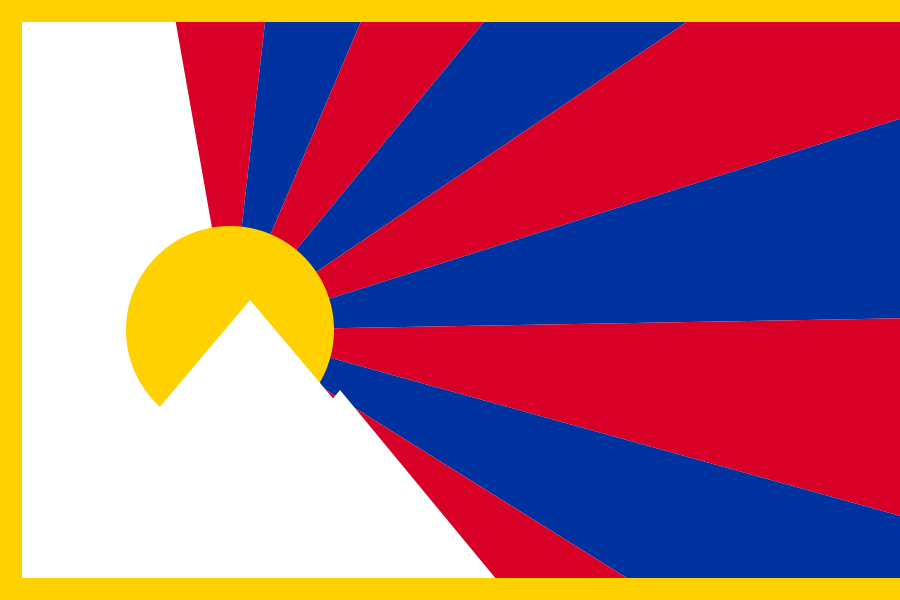
Regional and Movement FlagsIntroduced by the 13th Dalai Lama in 1916 and used by the Tibetan government in exile. It is banned in China.
Basic Flag Information
| Flag Name | Tibetan Flag |
|---|---|
| Category | Regional and Movement Flags |
| Adopted On | 1916 |
| Designer | The 13th Dalai Lama |
| Flag Proportion | 2:3 |
| Flag Shape | Rectangle |
| Number of Colors | 4 |
| Main Colors | Red, Blue, White, Gold |
| Design Type | Snow mountain with twelve rays, a sun and a gold border |
Flag Color Information
| Color | Appearance | HEX Code |
|---|---|---|
| Red | #D80027 | |
| Blue | #0033A0 | |
| White | #FFFFFF | |
| Gold | #FFD100 |
Flag Design and Symbols
| Red colour | Represents the red rays and the protectors of the faith |
|---|---|
| Blue colour | Represents the blue rays and the sky |
| White colour | Represents the snow mountain |
| Gold colour | Represents the sun and the border |
| Twelve rays | The twelve original tribes of Tibet |
| Snow mountain | Tibet itself |
| Gold border on three sides | The spread of Buddhist teaching, left open at the fly |
Facts about the Flag of Tibetan Flag
- The snow lions, sun and mountain design dates from 1916 and is used by the Tibetan government in exile and the Tibetan diaspora.
- The twelve rays of the sun represent the traditional descent groups of the Tibetan people.
- Introduced by the 13th Dalai Lama in 1916 and used by the Tibetan government in exile. It is banned in China.
- The flag belongs to Tibet. It is used in Tibet.
- It was founded in 1916 by the 13th Dalai Lama.
- It is based in Dharamshala, seat of the Tibetan government in exile.
- The flag was adopted in 1916. It was designed by The 13th Dalai Lama.
- The design is 110 years old as of 2026.
- Construction: Snow mountain with twelve rays, a sun and a gold border.
- It is normally drawn to a ratio of 2:3, which makes it rectangular.
- The flag uses 4 colours: red, blue, white and gold.
- The red stands for the red rays and the protectors of the faith.
- The blue stands for the blue rays and the sky.
- The white stands for the snow mountain.
- The gold stands for the sun and the border.
- Twelve rays: The twelve original tribes of Tibet.
- Snow mountain: Tibet itself.
- Gold border on three sides: The spread of Buddhist teaching, left open at the fly.
Frequently asked questions about the Tibetan Flag
What is the Tibetan Flag?
Introduced by the 13th Dalai Lama in 1916 and used by the Tibetan government in exile. It is banned in China.
Whose flag is the Tibetan Flag?
It is the flag of Tibet, used in Tibet.
When was Tibet founded?
Tibet was founded in 1916 by the 13th Dalai Lama.
When was the Tibetan Flag adopted?
The Tibetan Flag was adopted in 1916 and was designed by The 13th Dalai Lama.
What do the colours of the Tibetan Flag mean?
Red for the red rays and the protectors of the faith, blue for the blue rays and the sky, white for the snow mountain and gold for the sun and the border.
What do the symbols on the Tibetan Flag mean?
Twelve rays — The twelve original tribes of Tibet. Snow mountain — Tibet itself. Gold border on three sides — The spread of Buddhist teaching, left open at the fly.
Where is it based and how large is it?
It is based in Dharamshala, seat of the Tibetan government in exile.
What are the proportions of the Tibetan Flag?
It is normally drawn to a ratio of 2:3, which makes it rectangular.
What else is worth knowing about the Tibetan Flag?
The flag is prohibited in the People's Republic of China and is used by Tibetans abroad and by the government in exile.
Is the Tibetan Flag a national flag?
No. It is not the flag of any sovereign state and is listed here under Regional and Movement Flags.