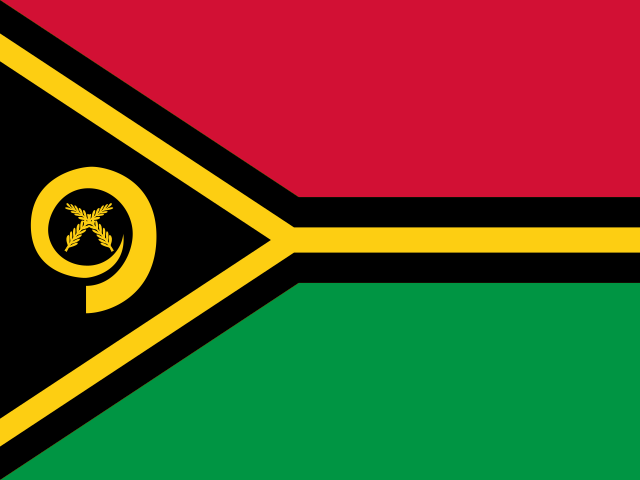
Flag of Vanuatu
countryThe flag of Vanuatu was adopted on February 18, 1980 to a design by Kalontas Mahlon. Horizontal bicolour with a black hoist triangle and a yellow pall. It uses 4 colours: red, green, black and yellow. The official proportions are 3:5.
Basic Flag Information
| Flag Name | Flag of Vanuatu |
|---|---|
| Country | Vanuatu |
| Official Country Name | Republic of Vanuatu |
| Capital | Port Vila |
| Continent | Oceania |
| Region | Melanesia |
| ISO Country Code | VU / VUT |
| Internet Domain | .vu |
| Calling Code | +678 |
| Currency | Vanuatu vatu (VUV) |
| National Language(s) | Bislama, English, French |
| Demonym | Ni-Vanuatu |
| Area | 12,189 km² |
| Population | 0.33 million (2025 est.) |
Flag Specifications
| Official Flag Name | Flag of Vanuatu |
|---|---|
| Adopted On | February 18, 1980 |
| First Used | 1980 |
| Current Version Adopted | February 18, 1980 |
| Flag Proportion | 3:5 |
| Flag Shape | Rectangle |
| Number of Colors | 4 |
| Main Colors | Red, Green, Black, Yellow |
| Designer | Kalontas Mahlon |
| Design Type | Horizontal bicolour with a black hoist triangle and a yellow pall |
| Official Status | Official National Flag |
| Government Authority | Government of Vanuatu |
Flag Color Information
| Color | Appearance | HEX Code | RGB | CMYK |
|---|---|---|---|---|
| Red | #D21034 | 210, 16, 52 | 0, 92, 75, 18 | |
| Green | #009543 | 0, 149, 67 | 100, 0, 55, 42 | |
| Black | #000000 | 0, 0, 0 | 0, 0, 0, 100 | |
| Yellow | #FDCE12 | 253, 206, 18 | 0, 19, 93, 1 |
Flag Design and Symbols
| Red colour | Represents the blood of boars and of men, and the unity of the people |
|---|---|
| Green colour | Represents the richness of the islands |
| Black colour | Represents the ni-Vanuatu people |
| Yellow colour | Represents the sunlight of Christianity |
| Boar’s tusk | Prosperity, worn as a pendant across the islands |
| Namele leaves | Peace — the 39 leaflets stand for the 39 members of parliament |
| Y-shaped pall | The layout of the islands in the Pacific |
Flag History
| Year / Period | Event |
|---|---|
| 1980 | The design was first used |
| 1980-02-18 | The current flag was officially adopted |
| Present | The flag remains in official use |
| Present | The flag remains in official use |
Flag Dimensions and Construction
| Official Ratio | 3:5 |
|---|---|
| Width | 3 units (hoist) |
| Length | 5 units (fly) |
Vanuatu Flag Usage
| Government Buildings | Yes |
|---|---|
| Schools | Yes |
| Civil Use | Yes |
| Official Ceremonies | Yes |
| Sports Events | Yes |
| National Holidays | Yes |
| Military | Yes |
| Naval Use | Yes |
| Embassies | Yes |
| International Events | Yes |
Other Official Flags of Vanuatu
| Flag Type | Use | Link |
|---|---|---|
| National Flag | National representation | View flag |
| Civil Flag | Used by civilians | View flag |
| State Flag | Used by government | View flag |
| War Flag | Used during military operations | View flag |
| Naval Ensign | Used by the navy | View flag |
| Air Force Flag | Used by the air force | View flag |
| Presidential Standard | Used by the head of state | View flag |
| Royal Standard | Used by the monarch | View flag |
| Historical Flag | Previous national flag | View flag |
Quick Facts About the Flag
| Flag Age | 46 years old as of 2026 |
|---|---|
| Adoption Date | February 18, 1980 |
| Oldest Version | 1980 |
| Designer | Kalontas Mahlon |
| Most Common Color | Red |
| Similar Flags | South Africa |
| Unique Feature | Horizontal bicolour with a black hoist triangle and a yellow pall |
Other y-shaped pall flags
See all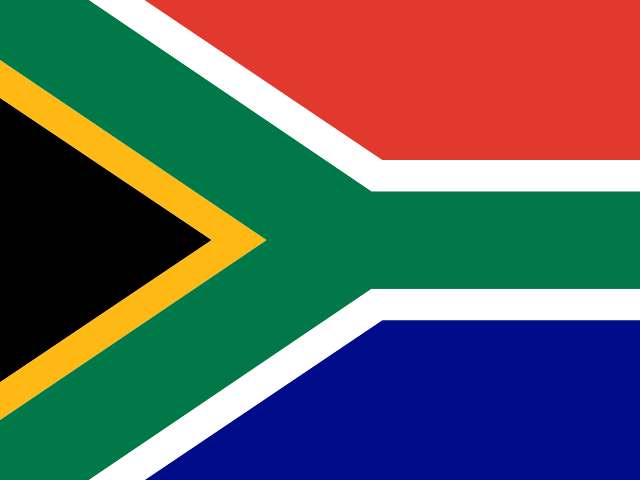
Facts about the Flag of Vanuatu
- The boar's tusk in the black triangle is a traditional symbol of prosperity, enclosing two crossed namele fern leaves.
- The thirty-nine leaflets on the fern fronds correspond to the members of the country's legislature.
- The horizontal Y construction is shared with only a handful of flags, most notably South Africa's.
- The flag of Vanuatu was officially adopted on February 18, 1980. It was designed by Kalontas Mahlon.
- The flag in its present form is 46 years old as of 2026.
- Design type: Horizontal bicolour with a black hoist triangle and a yellow pall.
- The official proportions are 3:5. It shares that ratio with 19 national flags.
- The flag uses 4 colours: red, green, black and yellow.
- The red on the flag stands for the blood of boars and of men, and the unity of the people.
- The green on the flag stands for the richness of the islands.
- The black on the flag stands for the ni-Vanuatu people.
- Boar’s tusk: Prosperity, worn as a pendant across the islands.
- Namele leaves: Peace — the 39 leaflets stand for the 39 members of parliament.
- Y-shaped pall: The layout of the islands in the Pacific.
- The design belongs to the "Y-shaped pall" family, shared with 1 other flag in this reference.
- Flags most often confused with it: South Africa.
- Vanuatu became independent on 30 July 1980 from France and the United Kingdom, which governed the islands jointly as the New Hebrides.
- Football is the most popular sport, with beach volleyball strong internationally.
Frequently Asked Questions about the Flag of Vanuatu
When was the flag of Vanuatu adopted?
The flag of Vanuatu was officially adopted on February 18, 1980.
What do the colours of the flag of Vanuatu mean?
Red for the blood of boars and of men, and the unity of the people, green for the richness of the islands, black for the ni-Vanuatu people and yellow for the sunlight of Christianity.
When did Vanuatu gain independence?
Vanuatu became independent on 30 July 1980 from France and the United Kingdom, which governed the islands jointly as the New Hebrides.
What is the national sport of Vanuatu?
Football is the most popular sport, with beach volleyball strong internationally.
What do the symbols on the flag of Vanuatu represent?
Boar’s tusk — Prosperity, worn as a pendant across the islands. Namele leaves — Peace — the 39 leaflets stand for the 39 members of parliament. Y-shaped pall — The layout of the islands in the Pacific.
Who designed the flag of Vanuatu?
The flag was designed by Kalontas Mahlon.
What are the proportions of the flag of Vanuatu?
The official ratio is 3:5, which makes the flag rectangular. It shares those proportions with 19 national flags.
What is the national anthem of Vanuatu?
The national anthem is "Yumi, Yumi, Yumi".
When is the national day of Vanuatu?
It falls on 30 July, Independence Day, and the flag is flown across the country.
What is the capital of Vanuatu?
The capital is Port Vila. The currency is the Vanuatu vatu (VUV) and the language spoken is Bislama, English, French.