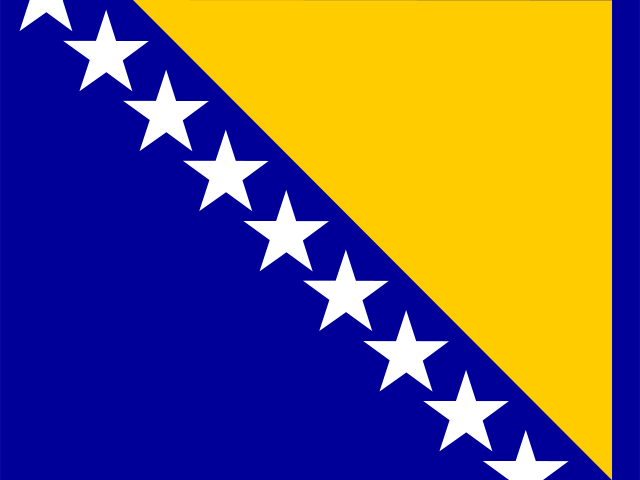
Flag of Bosnia and Herzegovina
countryThe flag of Bosnia and Herzegovina was adopted on February 4, 1998 to a design by Mladen Kolobarić. Blue field with a yellow triangle and a line of white stars. It uses 3 colours: blue, yellow and white. The official proportions are 1:2.
Basic Flag Information
| Flag Name | Flag of Bosnia and Herzegovina |
|---|---|
| Country | Bosnia and Herzegovina |
| Official Country Name | Bosnia and Herzegovina |
| Capital | Sarajevo |
| Continent | Europe |
| Region | Southeast Europe |
| ISO Country Code | BA / BIH |
| Internet Domain | .ba |
| Calling Code | +387 |
| Currency | Bosnia and Herzegovina convertible mark (BAM) |
| National Language(s) | Bosnian, Croatian, Serbian |
| Demonym | Bosnian, Herzegovinian |
| Area | 51,209 km² |
| Population | 3.2 million (2025 est.) |
Flag Specifications
| Official Flag Name | Flag of Bosnia and Herzegovina |
|---|---|
| Adopted On | February 4, 1998 |
| First Used | 1998 |
| Current Version Adopted | February 4, 1998 |
| Flag Proportion | 1:2 |
| Flag Shape | Rectangle |
| Number of Colors | 3 |
| Main Colors | Blue, Yellow, White |
| Designer | Mladen Kolobarić |
| Design Type | Blue field with a yellow triangle and a line of white stars |
| Official Status | Official National Flag |
| Government Authority | Government of Bosnia and Herzegovina |
Flag Color Information
| Color | Appearance | HEX Code | RGB | CMYK |
|---|---|---|---|---|
| Blue | #002F6C | 0, 47, 108 | 100, 56, 0, 58 | |
| Yellow | #FECB00 | 254, 203, 0 | 0, 20, 100, 0 | |
| White | #FFFFFF | 255, 255, 255 | 0, 0, 0, 0 |
Flag Design and Symbols
| Blue colour | Represents neutrality and Europe |
|---|---|
| Yellow colour | Represents the sun and hope |
| White colour | Represents the stars |
| Triangle | The three main peoples of the country — Bosniaks, Croats and Serbs — and the rough shape of the country |
| Cut-off stars | The stars run off the edges to suggest they continue without end, standing for Europe |
Flag History
| Year / Period | Event |
|---|---|
| 1998 | The design was first used |
| 1998-02-04 | The current flag was officially adopted |
| Present | The flag remains in official use |
| Present | The flag remains in official use |
Flag Dimensions and Construction
| Official Ratio | 1:2 |
|---|---|
| Width | 1 units (hoist) |
| Length | 2 units (fly) |
Bosnia and Herzegovina Flag Usage
| Government Buildings | Yes |
|---|---|
| Schools | Yes |
| Civil Use | Yes |
| Official Ceremonies | Yes |
| Sports Events | Yes |
| National Holidays | Yes |
| Military | Yes |
| Naval Use | Yes |
| Embassies | Yes |
| International Events | Yes |
Other Official Flags of Bosnia and Herzegovina
| Flag Type | Use | Link |
|---|---|---|
| National Flag | National representation | View flag |
| Civil Flag | Used by civilians | View flag |
| State Flag | Used by government | View flag |
| War Flag | Used during military operations | View flag |
| Naval Ensign | Used by the navy | View flag |
| Air Force Flag | Used by the air force | View flag |
| Presidential Standard | Used by the head of state | View flag |
| Royal Standard | Used by the monarch | View flag |
| Historical Flag | Previous national flag | View flag |
Quick Facts About the Flag
| Flag Age | 28 years old as of 2026 |
|---|---|
| Adoption Date | February 4, 1998 |
| Oldest Version | 1998 |
| Designer | Mladen Kolobarić |
| Most Common Color | Blue |
| Unique Feature | Blue field with a yellow triangle and a line of white stars |
Facts about the Flag of Bosnia and Herzegovina
- The design was imposed in 1998 by the international High Representative after the country's own institutions could not agree, which makes it one of very few national flags adopted by external decision.
- The blue and yellow were chosen partly to echo the European flag, and the colours were selected specifically to avoid association with any of the three constituent peoples.
- The stars are cut off at the top and bottom edges to suggest that the sequence continues indefinitely.
- The flag of Bosnia and Herzegovina was officially adopted on February 4, 1998. It was designed by Mladen Kolobarić.
- The flag in its present form is 28 years old as of 2026.
- Design type: Blue field with a yellow triangle and a line of white stars.
- The official proportions are 1:2. It shares that ratio with 54 national flags.
- The flag uses 3 colours: blue, yellow and white.
- The blue on the flag stands for neutrality and Europe.
- The yellow on the flag stands for the sun and hope.
- The white on the flag stands for the stars.
- Triangle: The three main peoples of the country — Bosniaks, Croats and Serbs — and the rough shape of the country.
- Cut-off stars: The stars run off the edges to suggest they continue without end, standing for Europe.
- Bosnia and Herzegovina became independent on 1 March 1992 from Yugoslavia.
- Football is the most popular sport.
- The national anthem is "Intermeco, which has no official lyrics".
- The flag is flown everywhere on 1 March, Independence Day.
- The capital is Sarajevo. The currency is the Bosnia and Herzegovina convertible mark (BAM).
Frequently Asked Questions about the Flag of Bosnia and Herzegovina
When was the flag of Bosnia and Herzegovina adopted?
The flag of Bosnia and Herzegovina was officially adopted on February 4, 1998.
What do the colours of the flag of Bosnia and Herzegovina mean?
Blue for neutrality and Europe, yellow for the sun and hope and white for the stars.
When did Bosnia and Herzegovina gain independence?
Bosnia and Herzegovina became independent on 1 March 1992 from Yugoslavia.
What is the national sport of Bosnia and Herzegovina?
Football is the most popular sport.
What do the symbols on the flag of Bosnia and Herzegovina represent?
Triangle — The three main peoples of the country — Bosniaks, Croats and Serbs — and the rough shape of the country. Cut-off stars — The stars run off the edges to suggest they continue without end, standing for Europe.
Who designed the flag of Bosnia and Herzegovina?
The flag was designed by Mladen Kolobarić.
What are the proportions of the flag of Bosnia and Herzegovina?
The official ratio is 1:2, which makes the flag rectangular. It shares those proportions with 54 national flags.
What is the national anthem of Bosnia and Herzegovina?
The national anthem is "Intermeco, which has no official lyrics".
When is the national day of Bosnia and Herzegovina?
It falls on 1 March, Independence Day, and the flag is flown across the country.
What is the capital of Bosnia and Herzegovina?
The capital is Sarajevo. The currency is the Bosnia and Herzegovina convertible mark (BAM) and the language spoken is Bosnian, Croatian, Serbian.